
Reviewed · ROCK CLIMBING & FERRATA ROUTES
Gran Canaria: Zipline and Mountaineering Tour
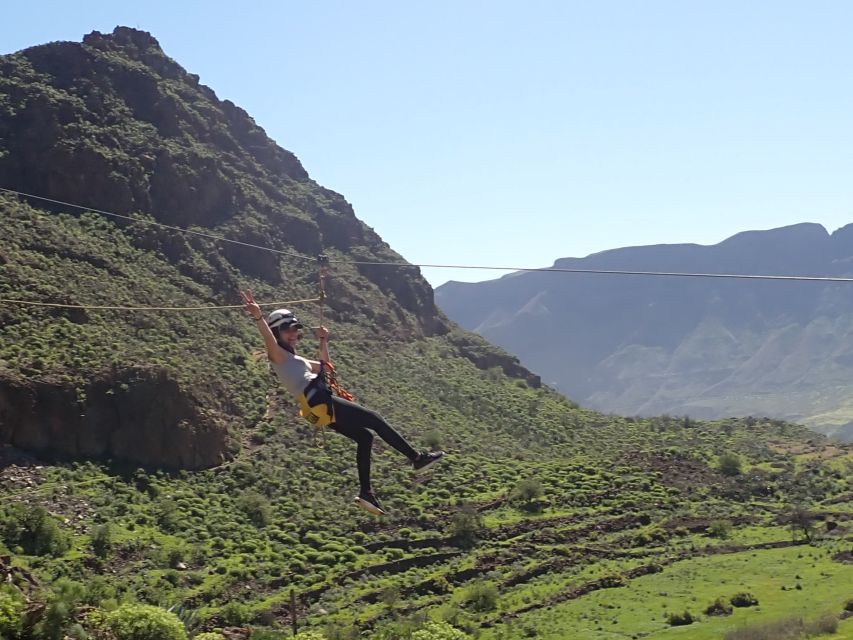
A cave, a zipline, and beginner confidence. This 4-hour Gran Canaria route in Santa Lucía de Tirajana strings together a first climbing wall, a 50-meter zipline, and a guided exit from a volcanic tube.
I especially like the small group feel and the way the tour builds skills step-by-step, not ego. You’ll also get practical help for the dark portion, since the gear includes lighting. The main drawback to weigh is fitness and comfort with heights/rope work; if you struggle with steady walking plus climbing movements, this won’t feel fun.
In This Review
- Key things to know before you go
- Santa Lucía de Tirajana: the setting that makes ropes feel meaningful
- Meeting point and getting ready: what to bring and how to move comfortably
- The “50-meter zipline” start: controlled speed, then straight into the climb wall
- Inside the dark volcanic tube: Moon Cave and the abseiling lesson
- Via ferrata finish: hiking and climbing in the same breath
- Guides, safety, and why the small group size matters (a lot)
- What’s included in the price, and why $104 can be good value
- Who should book this, and who should skip it
- Quick decision guide: should you book Gran Canaria Zipline and Mountaineering?
- FAQ
- How long is the Gran Canaria zipline and mountaineering tour?
- Where do I meet the group?
- What do I need to bring?
- Is this tour suitable for children?
- Can pregnant women join?
- What’s the group size?
- What languages are offered?
- What is the price and what’s included?
Key things to know before you go
- A real beginner route: you can climb and rappel even if this is your first time.
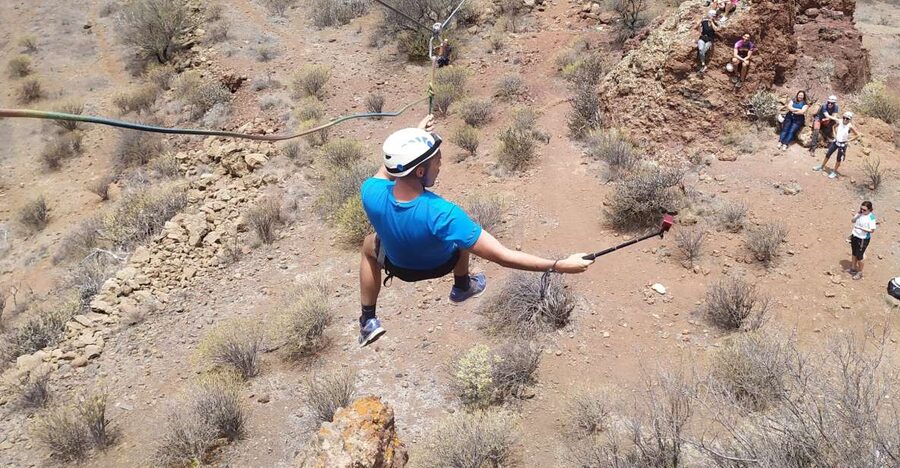
- 50 meters on a zipline: long enough to feel it, controlled enough to trust it.
- Volcanic tube access with lighting: the cave part is dark, but your kit covers that.
- Abseiling with ropes: you learn the technique so the exit is guided, not guesswork.
- Via ferrata finish: a mix of hiking and climbing when you’re already a bit tired.
- Safety-first pacing: short tutorials, then challenges, then another challenge.
Santa Lucía de Tirajana: the setting that makes ropes feel meaningful
Gran Canaria’s interior can feel surprisingly rugged. This tour runs on a route connected to Santa Lucía de Tirajana, an area tied to former aboriginal strongholds. That matters because the guide doesn’t just rattle off instructions; you’ll get a briefing that adds context to what you’re walking over.
I like that approach. It turns the day from random thrill rides into a sense of place. You’re not only chasing a view from a lookout. You’re moving through volcanic formations, following fixed lines, and learning why the terrain here shaped how people lived and traveled long ago.
More cables and holds on the island walls
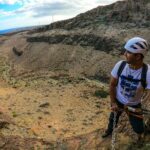
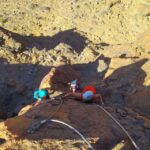
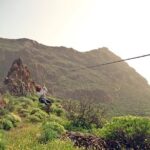
Meeting point and getting ready: what to bring and how to move comfortably
You meet after a concrete road, at a dirt car park. That’s straightforward, but I’d still plan to arrive a touch early so you can get set up without rushing.
You’ll want:
- Hiking shoes (not flip-flops, not thin sneakers)
- Weather-appropriate clothing (the cave portion and changing elevations can make temps feel different)
The tour is not for everyone. It’s limited to adults and teens who can handle rope work and sustained activity. It’s not suitable for children under 12, pregnant women, wheelchair users, people over 60, and people over 260 lbs / 118 kg. Low fitness is also a no-go.
Also keep this in mind: the day moves from walking to climbing to rope skills, then finishes with more hiking/climbing. If your body is used to easy strolls only, you’ll feel the difference here.
The “50-meter zipline” start: controlled speed, then straight into the climb wall
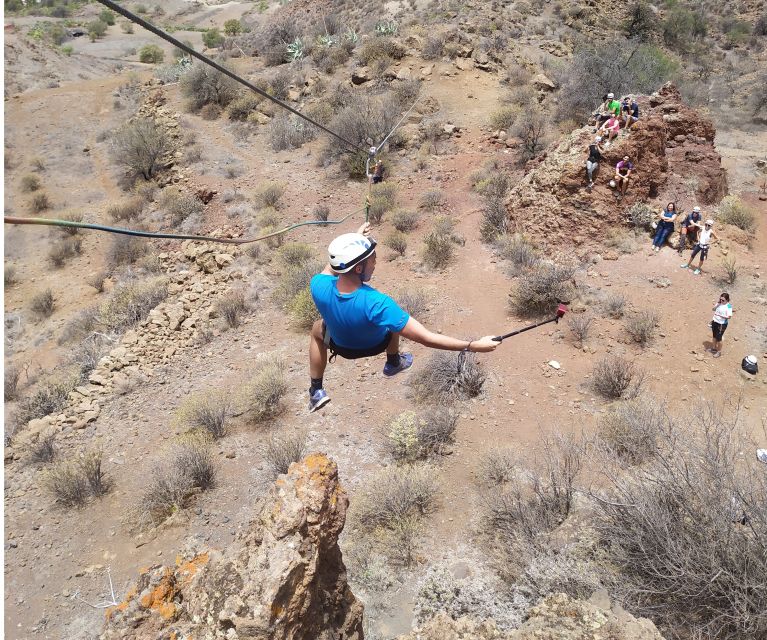
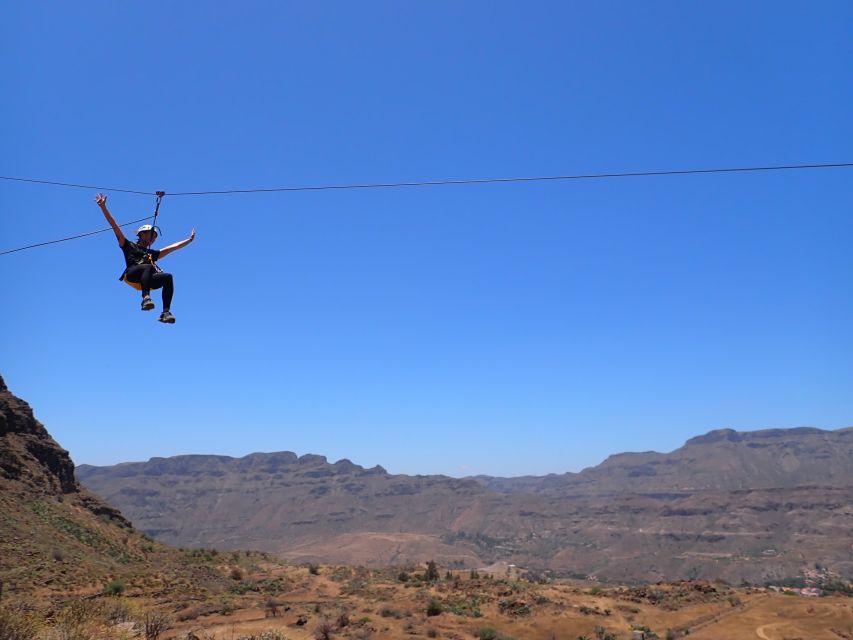
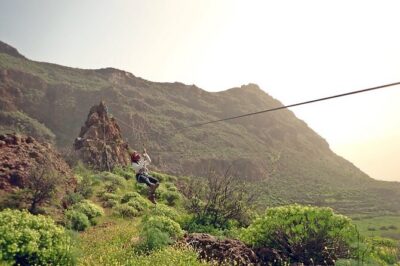
The pace is smart. You don’t jump into fear first thing. You start with an activity briefing, then you hit the first big thrill: a zipline about 50 meters long.
That initial glide is a confidence-builder. It gives you a safe mental template for how the guides think about control and timing. You’re not wondering if the day is random. It’s structured, and you’ll notice it right away.
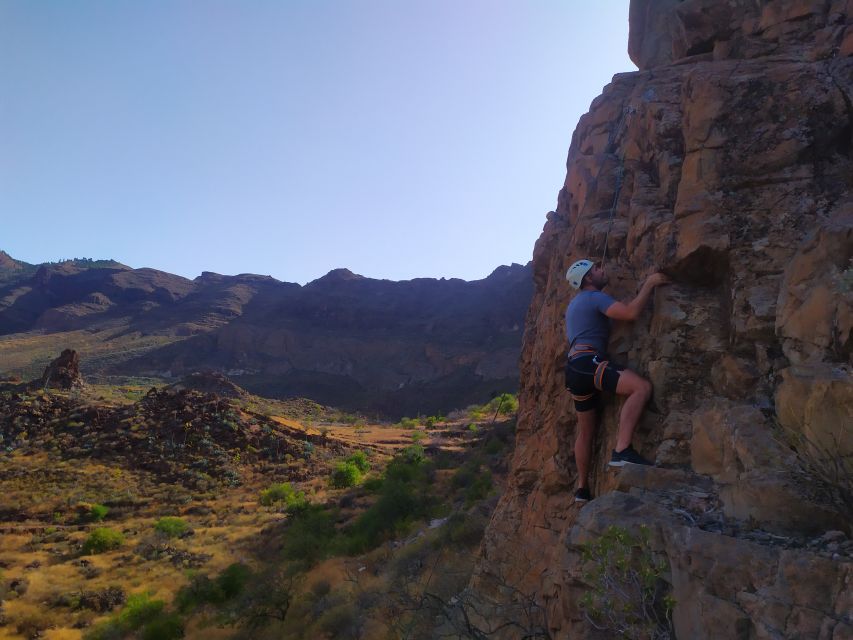
After the zipline, you keep moving to the next level: a climbing wall. You’ll get safety equipment and a short tutorial before you start. For first-timers, this is the key. Good equipment plus clear instruction turns a scary idea into a solvable task.
The route is designed as several linked steps rather than one continuous technical climb. That helps beginners. You learn, reset, and learn again.
Inside the dark volcanic tube: Moon Cave and the abseiling lesson
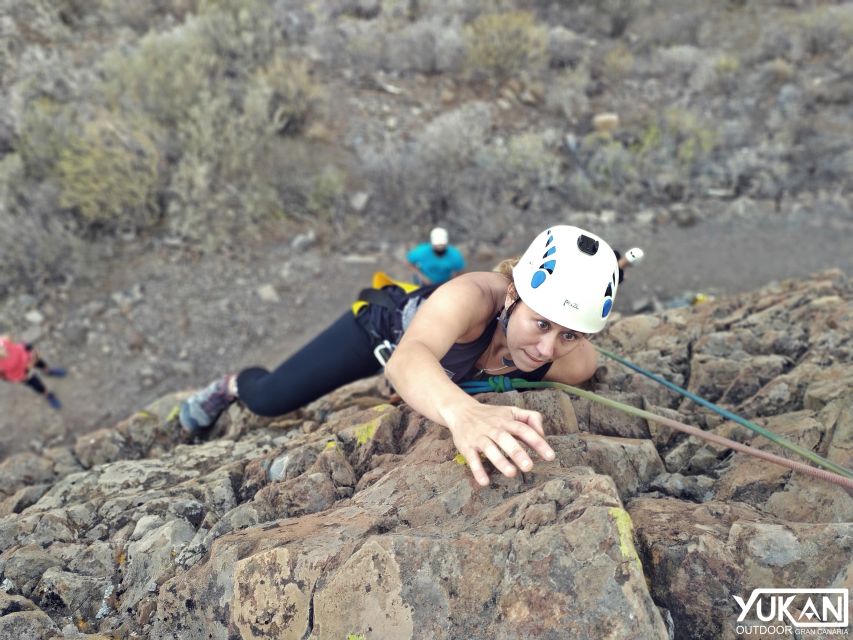
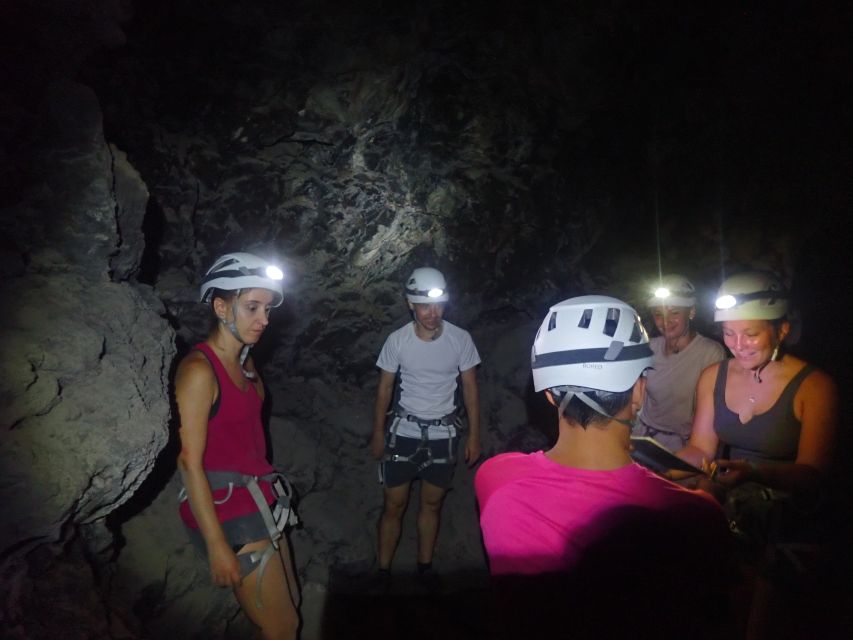
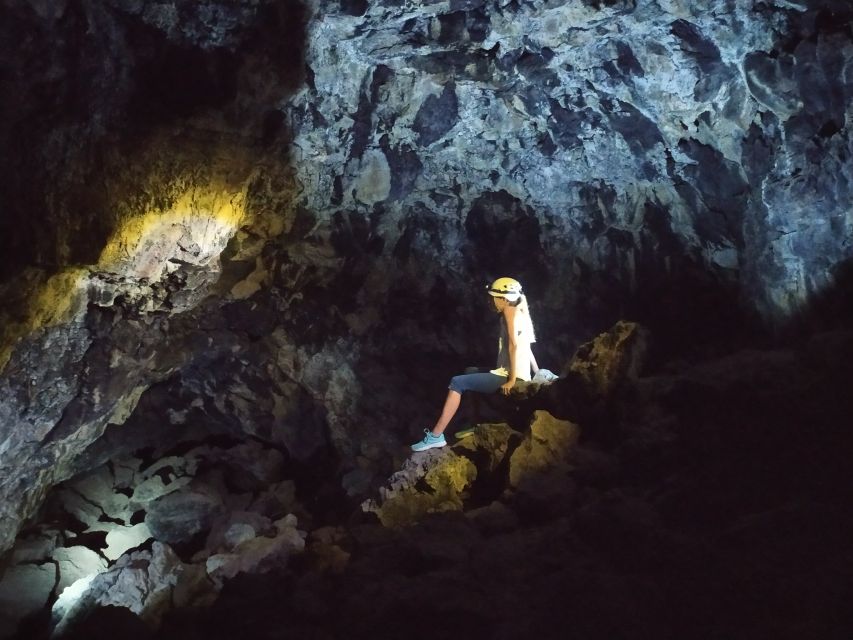
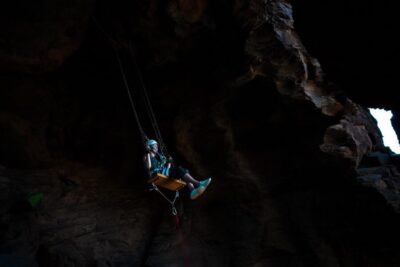
This part is where the day gets wonderfully wild. You’ll climb inside a dark volcanic tube, a cave formation that feels enclosed and cinematic. The important detail: your equipment includes lighting, so you’re not trying to “figure out the cave” with poor visibility.
Then comes the rope skill: abseiling (rappelling) to get out of the cave. You’ll learn how to handle the ropes first, not second-guess it while already halfway down.
This is the value of doing a guided beginner route. Rope work looks dramatic from the outside, but it’s mostly technique, body position, and calm handling. When someone teaches you, you spend your energy on doing it right—not panicking.
If you’re nervous around heights, that’s normal. What helps is having people close by who can correct your grip, stance, and pace in real time. Based on past guests’ experiences, the guides focus heavily on making you comfortable and safe before you move on.
Via ferrata finish: hiking and climbing in the same breath
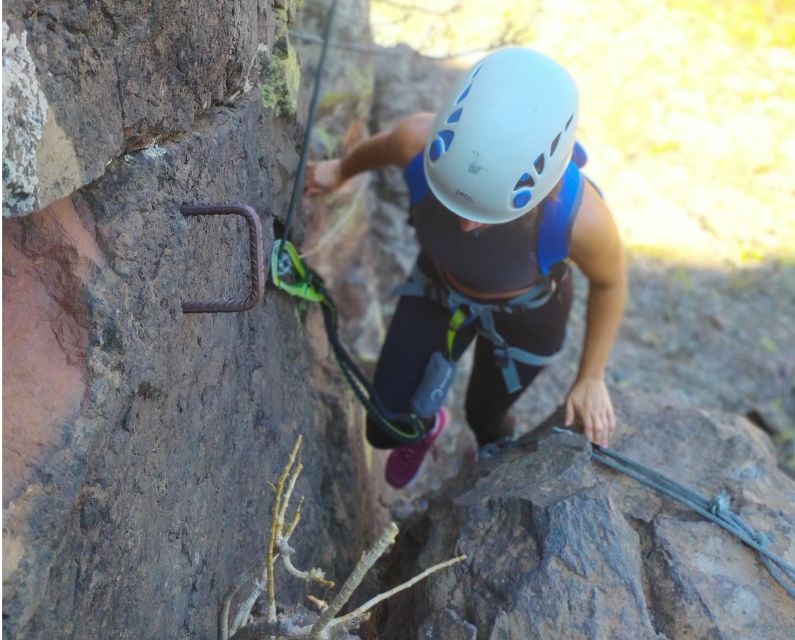
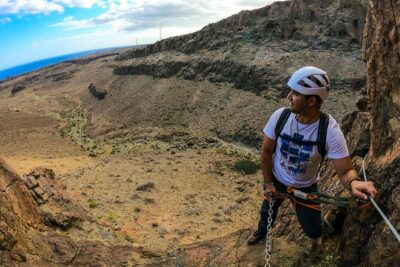
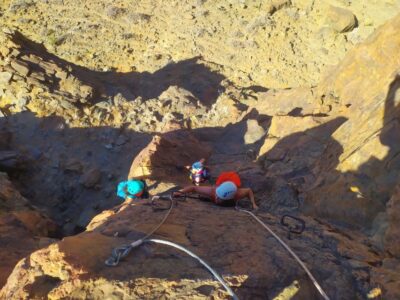
After the cave and rope segment, you won’t be handed a rest. You finish the route on a via ferrata, which is basically a mix of hiking and climbing using fixed protections.
This is where the day turns into stamina and coordination. You’ll still be in “adventure mode,” but it feels more like problem-solving: step up, hold on, test footing, then keep going. It also brings you back to where you started, which means you’re not done when the tough part ends.
One quiet benefit here: via ferrata systems teach you how to trust the structure. You’re not free-climbing in the void. You’re following established lines with guidance, so you can focus on safe movement.
By the end, you’ll likely feel that satisfied mix of tired legs and “I actually learned something.” That’s the kind of trophy you can’t buy in a shop.

Guides, safety, and why the small group size matters (a lot)
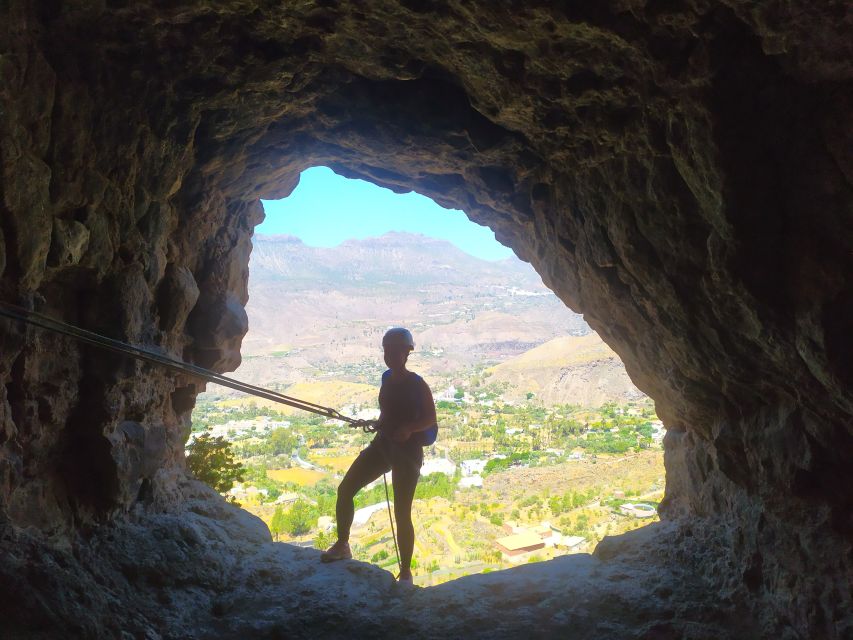
This tour is capped at 6 participants, and that size shows up in how the day feels. There’s enough attention for questions, but not so many people that the group becomes a slow moving line.
Guides are English/Spanish, and you’ll get a proper briefing before each phase. One name that comes up in past experiences is Daison—not because he performs, but because he’s described as patient and focused, switching between languages as needed. That’s a practical detail: if you’re nervous, clear communication reduces panic fast.
Safety equipment, insurance, and a professional mountain guide are included. The day also provides gear support for the cave segment, including lighting. And because the activities don’t leave much time for phone scrolling, you’ll appreciate the included photo coverage—someone else handles the camera so you don’t try to film while you should be clipping in.
What’s included in the price, and why $104 can be good value
At about $104 per person for 4 hours, you’re paying for more than “a thing to do.” You’re paying for:
- a professional mountain guide
- safety equipment
- insurance
- a snack
- pictures
- language support (English/Spanish)
For a beginner-friendly ropes-and-caves day, the guide time plus the specialized gear is the expensive part. The cave segment alone requires planning, safety systems, and lighting support. Then you add a zipline and via ferrata climbing/hiking. That’s multiple skill environments in one afternoon.
Also, the group size (limited to 6) pushes the value upward. You’re not sharing instruction with a crowd.
Where the cost can change your decision: hotel pickup and drop-off is only offered with a Premium option. If you’re staying near the meeting area, you may not care. If you need door-to-door convenience, budget for that add-on.
Who should book this, and who should skip it
This tour is best for you if:
- you want beginner climbing but with real instruction
- you’re excited by ziplining and via ferrata
- you want a structured day that builds confidence step-by-step
- you prefer small group attention over a large group scramble
It’s not a fit if:
- you’re under 12, over 60, pregnant, or need wheelchair access
- you’re above 260 lbs / 118 kg
- you have low fitness and aren’t ready for mixed hiking/climbing and rope work
- you know you can’t handle the idea of descending on ropes, even with coaching
One more practical note: wear shoes you trust. The tour is active and outdoors, and footing matters.
Quick decision guide: should you book Gran Canaria Zipline and Mountaineering?
Book it if you want a rare combo: a beginner-appropriate climbing route plus a cave exit practice plus a long zipline, all in one 4-hour package. I’d especially recommend it if you’re the kind of traveler who likes learning skills, not just getting photos.
Skip it and look for something gentler if you’re worried about effort levels, heights, or rope technique. This is designed for beginners, yes, but it still asks you to move, climb, and rappel with proper form.
If you can handle that, you’ll walk away with a day that feels like three activities stitched into one confident story: zipline glide, wall climb, cave ropes, and via ferrata steps.
FAQ
How long is the Gran Canaria zipline and mountaineering tour?
The tour lasts about 4 hours.
Where do I meet the group?
Meet after a concrete road, at the dirt car park. That’s listed as the correct meeting spot.
What do I need to bring?
Bring hiking shoes and weather-appropriate clothing.
Is this tour suitable for children?
No. It’s not suitable for children under 12.
Can pregnant women join?
No. The tour is not suitable for pregnant women.
What’s the group size?
It’s a small group, limited to 6 participants.
What languages are offered?
Instruction is available in English and Spanish.
What is the price and what’s included?
The price is about $104 per person. Included are a professional mountain guide, safety equipment, insurance, a snack, and pictures.
More of the Gran Canaria Ledger
- Gran Canaria: Catamaran Dolphin Watch Cruise with Snorkeling★ 4.4 · 4,761 reviews
- Maspalomas: Guided Camel Ride in the Maspalomas Sand Dunes★ 4.4 · 4,526 reviews
- Poema del Mar Skip-the-Line Ticket★ 4.8 · 3,856 reviews
- Puerto de Mogán: Submarine Tour★ 4.4 · 3,792 reviews
Cables and Holds on the Island Walls
- Gran Canaria: Guided Via Ferrata Excursion★ 4.9 · 198 reviews
- Via Ferrata in Gran Canaria. Vertical adventure park. Small groups★ 5.0 · 183 reviews
- Gran Canaria: Cliff Climbing Via Ferrata Trip by Maspalomas★ 4.9 · 177 reviews
- Climbing + Zipline + Via Ferrata + Cave. Adventure route in Gran Canaria★ 5.0 · 149 reviews
Fresh on the Gran Canaria List
- Gran Canaria: Highlights & hidden gems with Sky Rebels
★ 5.0 · 3 reviews - Escape room “The gratest show on earth” at Holidayworld
★ 3.9 · 3 reviews - Wanderungen im grünen Gran Canaria
★ 5.0 · 3 reviews - 2 hours Double Pass Spa Circuit in Hotel Don Gregory
★ 3.5 · 3 reviews - Las Palmas Maspalomas Gran Canaria Salsa Lovers Dance Experience
★ 5.0 · 3 reviews - Traditional Market Day and San Mateo & Teror
★ 3.5 · 3 reviews
Rock Climbing & Ferrata Routes, compared.
 ★ 4.9Guided Via Ferrata ExcursionFrom $82198 reviews
 ★ 5.0Via Ferrata in Gran Canaria. Vertical adventure park. Small groupsFrom $78183 reviews
 ★ 4.9Cliff Climbing Via Ferrata Trip by MaspalomasFrom $82177 reviews
 ★ 5.0Climbing + Zipline + Via Ferrata + Cave. Adventure route in Gran CanariaFrom $84149 reviews
 ★ 5.0Top Vía Ferrata for Beginners in Gran Canaria ツFrom $102112 reviews
 ★ 5.0Via Ferrata Gran Canaria: Adventure Route for First Time ClimbersFrom $8366 reviews
 ★ 5.0Rock Climbing from Beginners to Experts – Small Groups ツFrom $9661 reviews
 ★ 4.9Las Palmas: Coastering, Via Ferrata, Water Jumping & SnorkelFrom $8240 reviews
Browse the lists this tour appears in