
Reviewed · WINE, RUM & BANANA TOURS
Gran Canaria: Banana World Guided Tour & Tasting
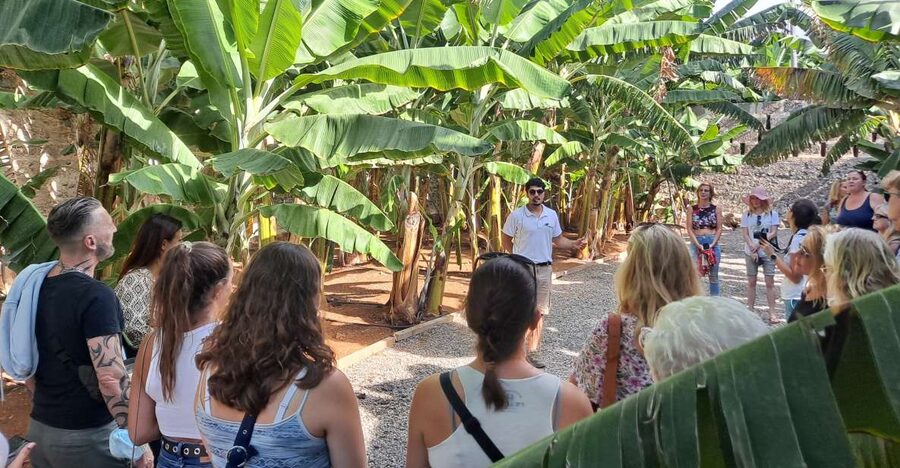
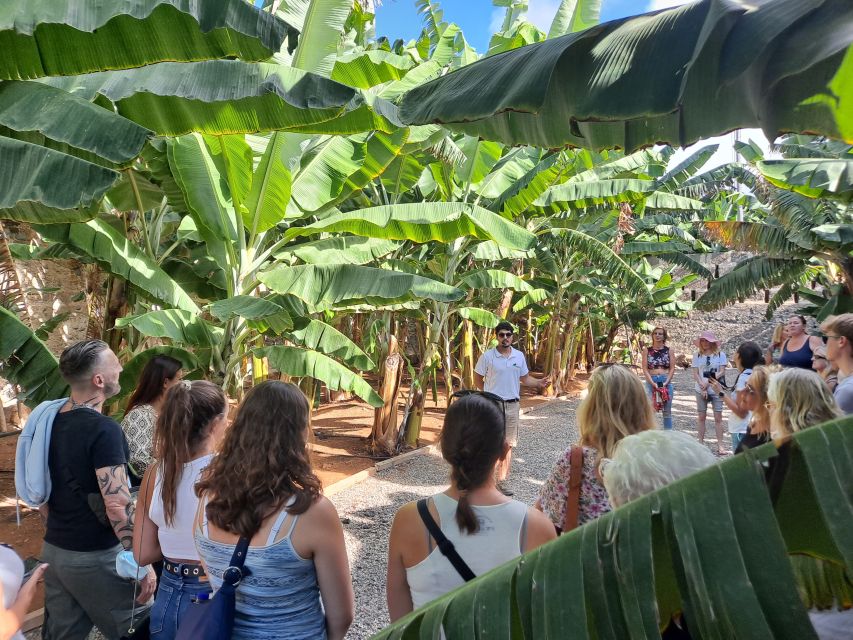
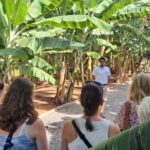
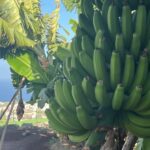
Bananas here are a whole system. At Hacienda La ReKompensa, guides like Daniela (and others you might get on different days) walk you through the banana plantation, plus the little museum with standout ocean views. I like that the tour doesn’t treat bananas like a novelty, because you learn how the plants are grown and harvested. I also love the tasting at the end, where you try local products made with Canarian bananas, not just samples that taste like marketing.
One thing to plan for: this visit isn’t suitable for people with mobility impairments, and the farm paths are meant for comfortable walking over uneven ground. If you’re expecting a long wandering day, note that the guided part is only about 40 minutes, so it’s short, focused, and best if you enjoy getting the highlights fast.
In This Review
- Key things to know before you go
- Banana World at Hacienda La ReKompensa: a short tour with real texture
- Getting there and finding the Banana Museum meeting point
- The farm walk: 7,000 banana plants, avocado trees, and ocean views
- Museo del Platano: the history stop that keeps things grounded
- The part that wins hearts: guides, questions, and banana facts you’ll actually keep
- Seeing 13 banana types: why that matters beyond trivia
- Other plants on the estate: avocados and fruit trees you can spot
- The view breaks: museum panoramas over the Atlantic and farmland
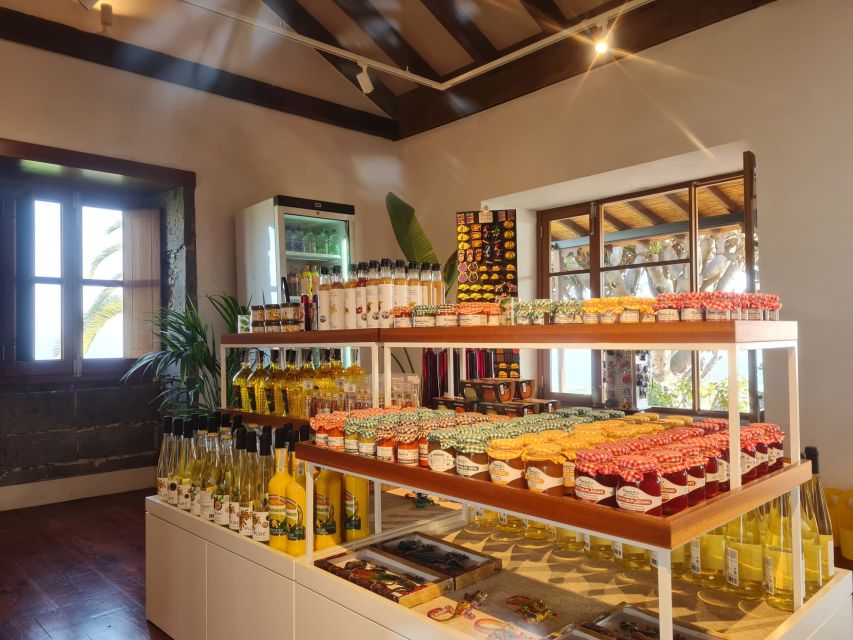
- The tastings: Canarian banana products with real variety
- The shop and souvenir strategy: what to buy (and what to skip)
- Price and value: is $17 worth a 40-minute guided tour?
- Who should book this banana tour?
- Timing and weather: rain or shine, so plan for outside time
- Should you book Banana World at Hacienda La ReKompensa?
- FAQ
- How long is the Gran Canaria Banana World guided tour and tasting?
- Where do I meet the guide at Hacienda La ReKompensa?
- What’s included in the tour price?
- What language is the live guide?
- What should I bring for the tour?
- Is the tour suitable for people with mobility impairments?
Key things to know before you go
- 13 banana varieties explained on the farm: You’ll see multiple types, not just one “default” banana.
- Big views from the museum: Expect Atlantic Ocean panoramas over the plantation.
- A working-feeling plantation: You’re touring a real estate with thousands of plants, not a display set.
- Tastings of Canarian banana products: Think jams, juices, and even banana wine, plus other farm-made items.
- Restored 1804 Canarian house: The interpretation center lives in a historic building.
Banana World at Hacienda La ReKompensa: a short tour with real texture
This is one of those Gran Canaria experiences that surprises you by being more practical than sugary. Yes, you’re surrounded by bananas. But the best part is how quickly you grasp that bananas here are a cultivated crop with specific techniques, timing, and lots of supporting plants.
The timing is part of the appeal. At 40 minutes, you can fit this into almost any day without sacrificing the rest of your trip. It works especially well if you’re curious about food origins and want a guided explanation you don’t have to research afterward.
And the setting helps. Hacienda La ReKompensa sits above the island’s greenery with Atlantic Ocean views from the museum side. Even if the group is small, the views keep your brain engaged while the guide talks through cultivation and history.
More cellars, rum and banana country

Getting there and finding the Banana Museum meeting point
You’ll start at Hacienda La ReKompensa and meet inside the museum. When you arrive, go to the big parking area by the estate, then follow the signs for Banana Museum. The guide meets you inside.
This matters because the farm property can feel like a destination-within-a-destination. If you arrive confused and wandering, you lose the “on time” rhythm that makes these short guided tours feel smooth.
Tip I’d follow: arrive with a little buffer so you can park, find the signs, and step into the museum without rushing. The tour runs rain or shine, so less stress means a better experience.
The farm walk: 7,000 banana plants, avocado trees, and ocean views
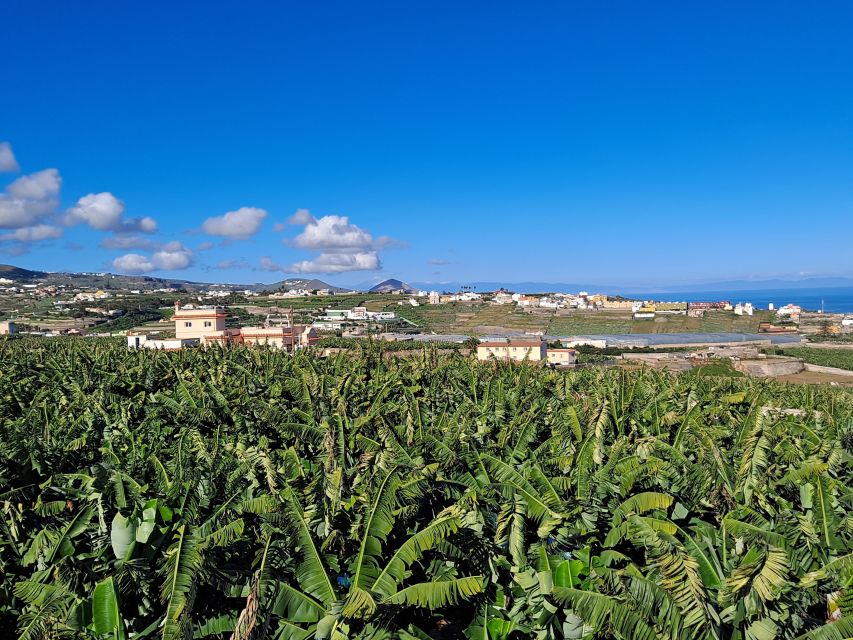
The tour starts with you orienting to the farmland. You’re not just viewing a few plants in a row—you’re on grounds that grow over 7,000 banana plants and also include 150 avocado trees, along with other fruit trees.
That mix is useful. It hints at how banana farming works in the real world: it’s rarely a single-crop operation. The guide can point out other plants grown on the estate and help you understand the wider agricultural system, not just the banana leaves and fruit.
As you walk, you’ll also pick up the “why” behind the visuals. Large banana plants aren’t only about the fruit; the farm layout and growing conditions are part of the story. And when the view opens up, you get that classic Gran Canaria contrast: the island’s green cultivation in the foreground and the Atlantic out beyond.
Museo del Platano: the history stop that keeps things grounded
At the Museo del Platano, you’re guided through the banana story in a more structured way than you’ll get from just strolling the fields. The tour includes museum time plus a safety briefing, which is a good sign—this place wants visitors to learn without turning the visit into a casual free-for-all.
What I like about the museum setting is that it’s not trapped indoors. You get a sense of the estate’s scale and geography while you learn. The museum and interpretation spaces are also housed in a restored Canarian house dating back to 1804, so you’re not only learning about modern farming; you’re stepping into a historic setting that fits how the Canary Islands developed food production over time.
If you’re the kind of person who likes to connect the dots between “where food comes from” and “how the culture built that system,” this museum piece is what ties the tour together.
The part that wins hearts: guides, questions, and banana facts you’ll actually keep
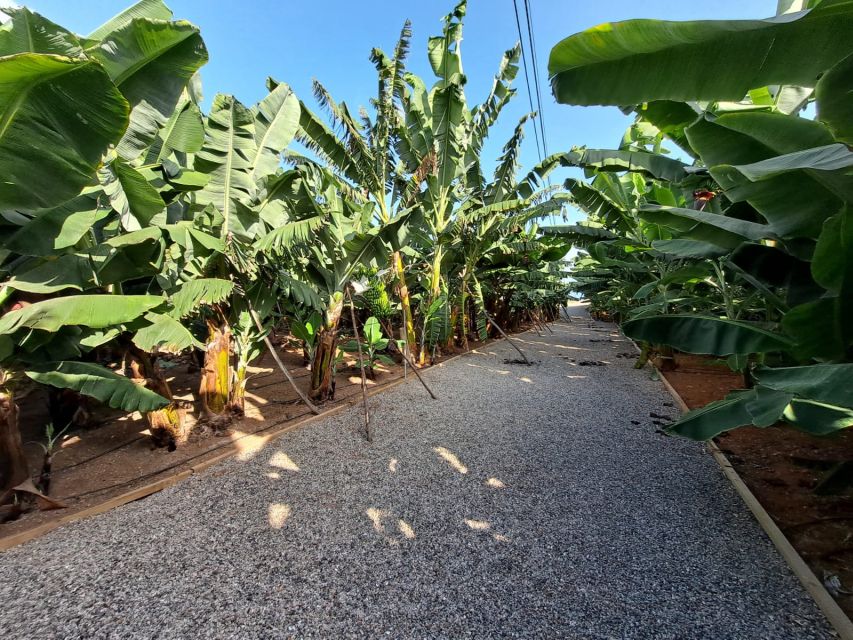
One reason this tour keeps earning such strong marks is that the guides tend to make the session interactive, not lecture-y. In the pool of guides associated with the experience, names like Daniela, Shaira, Jon, Steve, Andrea, Laura, Ismael, Cynthia, and Maria show up again and again in participant feedback.
You can expect the guide to cover:
- how bananas are grown and harvested in the Canaries
- the cultivation techniques used in the local banana harvest
- and how the banana varieties you see on the grounds fit into the bigger picture
The 40-minute format is a sweet spot. Long tours can start to drag. Short tours can turn into speed-reading. Here, most people feel they got the right amount of information without being overwhelmed.
And if you enjoy asking questions, this is one of the places where you won’t feel like you’re interrupting. Guides answer, explain, and usually connect back to what you’re seeing on the farm.
Still hungry? More Canarian plates worth the fork


Seeing 13 banana types: why that matters beyond trivia
The tour highlights thirteen different types of banana. That detail is more meaningful than it sounds.
Most casual banana conversations stop at yellow vs. green—or maybe “sweet vs. not sweet.” On this farm, you’re seeing that banana cultivation is about variety, performance, and growing needs. Different types can mean different harvesting timing, flavor profiles, and how the plant behaves in local conditions.
Even if you don’t memorize all the names, the visual differences help you understand that bananas aren’t one uniform product. They’re a collection of varieties shaped by farming decisions. And once you make that mental shift, the tasting at the end becomes more fun, because you’re trying to connect fruit traits to what ends up in the jar or bottle.
Other plants on the estate: avocados and fruit trees you can spot
You’ll likely notice the estate isn’t just bananas and banana leaves. You’ll see avocado and other fruit trees mixed into the grounds.
Why that’s worth your attention: it turns the tour from a single-fruit show into an agricultural site. You start to think like a farmer. You see how farms can diversify plantings, and how bananas fit into a larger crop strategy rather than living in isolation.
If you’re a plant nerd (or you just like seeing how real agriculture works), this is one of the small details that makes the tour feel grounded.
The view breaks: museum panoramas over the Atlantic and farmland
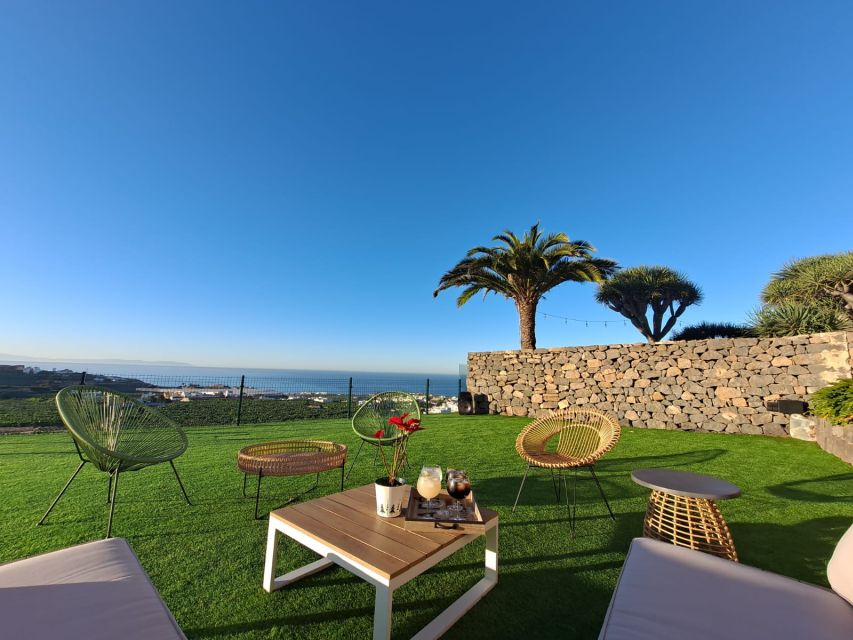
This place is staged by nature. You’ll get ocean and farmland views as part of the experience, especially around the museum area.
I’m not talking about a quick “photo stop.” The view is part of the learning environment. It helps you understand scale and layout, and it gives your eyes a rest from up-close plant details.
Expect unbeatable views over the Atlantic and the greenery of Gran Canaria. It’s the kind of setting that makes the tour feel like more than a checklist activity.
The tastings: Canarian banana products with real variety
The tasting is the payoff. You’ll try local products made with Canarian bananas, including items like:
- jams
- banana quince
- banana wine
- other banana-based drinks and snacks (like juices)
From reviews, people really enjoy that the tasting includes both food and drink. Some visitors even note that after the tour you can explore the grounds at your own pace, so the tasting doesn’t feel like a rushed finale.
A useful expectation-setting note: the tasting selection is tied to what the shop offers that day. So even though banana wine and jams are common highlights, the exact lineup can vary slightly.
If you don’t want sugar overload, pace yourself. One pass is enough to appreciate the flavor differences and how the banana turns into something else through processing.
The shop and souvenir strategy: what to buy (and what to skip)
The interpretation center includes a museum shop with local and ethical products, and it’s housed in that historic 1804 building. If you’re the type who buys edible souvenirs, this is where it makes sense.
What tends to be easiest buys:
- sealed banana-based jars (like jams or quince products)
- drink bottles if you plan to carry them responsibly in your luggage
- cosmetics made from banana (if you’re curious and want to try something different)
What I’d skip unless you’ve got a clear use plan: large quantities of one item if you’re just collecting labels. This tour is best as a flavor sampler. Let the tasting guide your choices.
Price and value: is $17 worth a 40-minute guided tour?
For about $17 per person, you’re paying for three things at once:
1) entry to Hacienda La ReKompensa and the banana museum
2) a live guided tour focused on how bananas are farmed and harvested
3) banana tastings of local products
At that price, it’s not priced like a long private excursion. It’s priced like a practical add-on that still feels like a real activity. The value comes from the combo: the farm context plus the chance to taste results of that farming.
If you like “food origin” tours, this is a solid way to spend a short window of time. If you’re only looking for a quick photo and don’t care about tastings or cultivation, you might feel the time is too short for the price.
Who should book this banana tour?
You’ll probably love Banana World if you:
- enjoy guided learning that’s short, focused, and visual
- want a farm experience without committing to a long day
- like tasting local products and comparing flavors
- travel with food-loving friends who don’t need everything to be serious history
You might want to skip or choose differently if:
- you have mobility impairments, since the experience is listed as not suitable
- you need a long activity to fill the day (this is about 40 minutes of guided touring)
Families can also find it appealing. Some reviews mention a small playground on site, and the tour seems friendly for kids as long as they can handle a short walk.
Timing and weather: rain or shine, so plan for outside time
The tour happens rain or shine, so you should assume you’ll be outside for at least part of the experience. Bring comfortable shoes, since you’ll be walking the grounds.
Don’t overpack with fragile plans. This is an outdoor farm property where weather changes how the air feels, but the schedule stays running.
If you’re sensitive to slippery ground, take it slow on paths and trust your shoes. The tour is short—moving carefully keeps it enjoyable.
Should you book Banana World at Hacienda La ReKompensa?
I’d book it if you want an easy, memorable Gran Canaria stop that mixes farmland learning with tastings. For $17, the blend of guided context, ocean-side museum views, and banana product samples hits the right value sweet spot.
I wouldn’t book it if you’re only interested in bananas as a snack and nothing else. This tour works best as a “banana explained” experience, not just a tasting table.
If you do go, choose it on a day when you can arrive a bit early and slow down during the museum and tasting. That’s when the tour feels like more than time on a schedule.
FAQ
How long is the Gran Canaria Banana World guided tour and tasting?
The guided experience is listed as 40 minutes.
Where do I meet the guide at Hacienda La ReKompensa?
Park in the big parking space by the estate, follow the signs for Banana Museum, and meet your guide inside the museum.
What’s included in the tour price?
Included are entry tickets to Hacienda La ReKompensa, a guided tour, and banana tastings.
What language is the live guide?
The tour offers a live guide in English and Spanish.
What should I bring for the tour?
Bring comfortable shoes.
Is the tour suitable for people with mobility impairments?
No, the experience is listed as not suitable for people with mobility impairments.
More of the Gran Canaria Ledger
- Gran Canaria: Catamaran Dolphin Watch Cruise with Snorkeling★ 4.4 · 4,761 reviews
- Maspalomas: Guided Camel Ride in the Maspalomas Sand Dunes★ 4.4 · 4,526 reviews
- Poema del Mar Skip-the-Line Ticket★ 4.8 · 3,856 reviews
- Puerto de Mogán: Submarine Tour★ 4.4 · 3,792 reviews
The Canarian Table, Plate by Plate
- Gran Canaria: Camel Ride Safari w/ Optional Food & Transport★ 4.2 · 1,167 reviews
- The Volcano Heart Tour: Hiking, Tasting and Sunset Experience★ 5.0 · 1,120 reviews
- Gran Canaria: Fun Catamaran Cruise with Food and Drinks★ 4.6 · 1,019 reviews
- Gran Canaria: Catamaran Day Trip with Food and Drinks★ 4.8 · 845 reviews
Cellars, Rum and Banana Country
- Guided tour of the Banana World★ 5.0 · 3,431 reviews
- Gran Canaria: Rum, Wines and Banana Tour★ 4.6 · 261 reviews
- Guided Tour at Ron Arehucas Distillery★ 4.5 · 192 reviews
- Guided Tour at Ron Arehucas Distillery★ 4.8 · 179 reviews
Fresh on the Gran Canaria List
- Gran Canaria: Highlights & hidden gems with Sky Rebels
★ 5.0 · 3 reviews - Escape room “The gratest show on earth” at Holidayworld
★ 3.9 · 3 reviews - Wanderungen im grünen Gran Canaria
★ 5.0 · 3 reviews - 2 hours Double Pass Spa Circuit in Hotel Don Gregory
★ 3.5 · 3 reviews - Las Palmas Maspalomas Gran Canaria Salsa Lovers Dance Experience
★ 5.0 · 3 reviews - Traditional Market Day and San Mateo & Teror
★ 3.5 · 3 reviews
Wine, Rum & Banana Tours, compared.
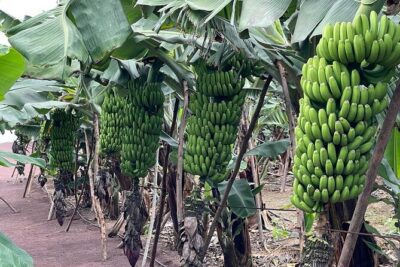 ★ 5.0Guided tour of the Banana WorldFrom $183,431 reviews
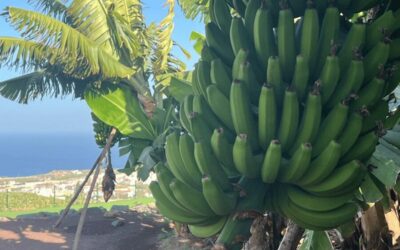 ★ 4.6Rum, Wines and Banana TourFrom $81261 reviews
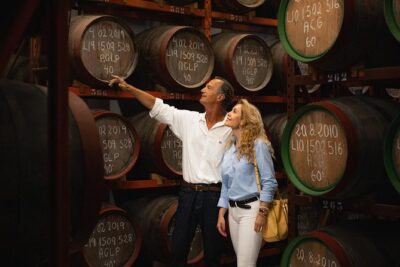 ★ 4.5Guided Tour at Ron Arehucas DistilleryFrom $13192 reviews
★ 4.8Guided Tour at Ron Arehucas DistilleryFrom $12179 reviews
★ 4.5Guided Tour at Ron Arehucas DistilleryFrom $13192 reviews
★ 4.8Guided Tour at Ron Arehucas DistilleryFrom $12179 reviews
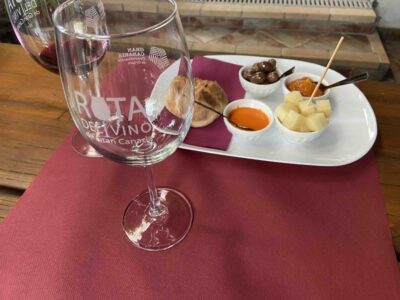 ★ 4.9Best Wineries and Views TourFrom $114173 reviews
 ★ 4.7Winery Tour, Wine Museum, and TastingFrom $34131 reviews
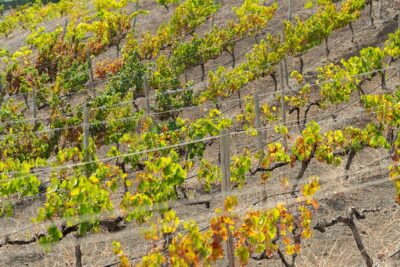 ★ 5.0Canarian Wine Experience at Bodega los LiriosFrom $1967 reviews
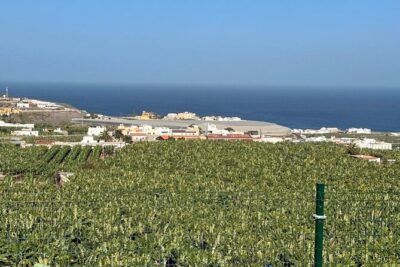 ★ 4.5Banana Museum, Rum Distillery & Winery with Tasting: Premium tourFrom $8362 reviews
Browse the lists this tour appears in