
Reviewed · ROCK CLIMBING & FERRATA ROUTES
Gran Canaria : Vía Ferrata “Amor & Odio” – Medium level
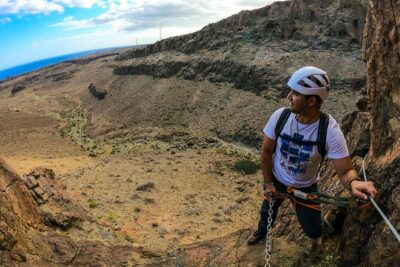
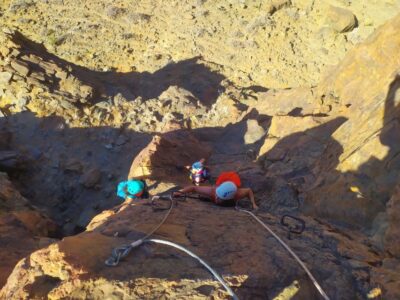
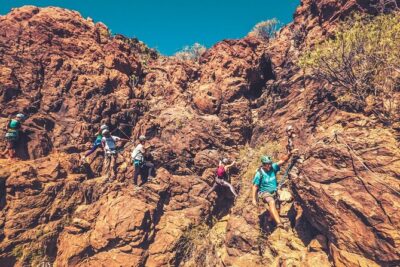
Cables, heights, and sea air. On Gran Canaria’s Amor y Odio via ferrata, you’ll move along protected routes with fixed cables while the coast keeps showing up in your view. I especially like how it feels beginner-friendly without being a walk in the park, thanks to its medium difficulty options and guide-led route choices.
Two things I liked a lot. First: the small group size (max 9) makes it easy to get personal coaching and feel steady as the route changes. Second: you get a professional photo report afterward, so you’re not stuck with one shaky GoPro shot while you’re trying not to panic.
One consideration: if you have vertigo or get overwhelmed by exposed spots, this may be more stressful than fun—even though it’s rated medium.
In This Review
- Key highlights you’ll feel right away
- Amor y Odio: why this medium via ferrata feels like a real achievement
- Meeting behind Bahia Feliz bus stop: start point and what to expect at check-in
- The 30-minute walk-in: where comfort is built before the cables start
- Entering the ferrata: how medium difficulty works in real life
- Monkey Bridge: the crossing that turns nerves into a story
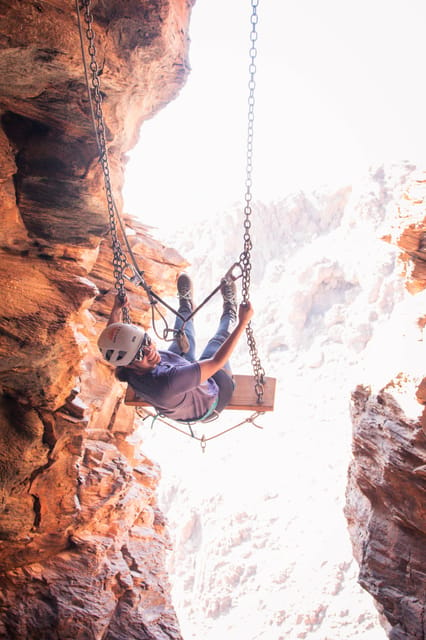
- The swing: a short adrenaline hit with a big reward
- Finishing and the return walk: getting the legs back under you
- Gear, guides, and safety: what’s actually included
- What to bring (and what to skip) so you don’t lose time
- Price check: is $82 worth it for 4 hours?
- Who should do Amor y Odio (and who should not)
- Should you book this via ferrata in Gran Canaria?
- FAQ
- How long is the Gran Canaria Amor y Odio via ferrata?
- Where do we meet for the activity?
- What’s included in the price?
- What should I bring?
- Are there age and height restrictions?
- What languages do the guides speak?
Key highlights you’ll feel right away
- Sea views along the route: the ocean shows up often, so the effort feels more rewarding.
- Medium route with choices: depending on your level and the group, you can pick different lines with different difficulty.
- Monkey Bridge moment: a signature crossing that’s memorable and very “via ferrata.”
- Swing for big views: it’s built into the route for a short adrenaline spike.
- Top-quality gear and safety focus: you’re covered with the right equipment and qualified guides.
- A day that keeps you fed: energy bar plus water to help you keep going.
Amor y Odio: why this medium via ferrata feels like a real achievement
Via ferrata means iron path—fixed cables, ladders, bridges, and safety devices that let you climb with a harness-and-connector setup rather than free soloing. The payoff is the same every time: you’re suspended between “I can’t” and “I’m doing it,” then you look up and realize you made it.
What makes Amor y Odio practical for real people is its medium label. That usually translates to: you’ll feel challenged, but you’re not expected to be an expert climber. The route’s design also lets the guide steer you toward sections that match your comfort, so the day doesn’t turn into a single-track struggle.
And then there’s the best part—sea views. When your brain starts bargaining for an early exit, seeing the coastline in your peripheral vision helps you keep your breathing under control. You’re climbing outdoors, with the mountain and the water sharing the stage.
Not decided yet? These are the Gran Canaria trips people book first.



Meeting behind Bahia Feliz bus stop: start point and what to expect at check-in
Your meeting point is easy to miss if you arrive late: there’s parking just behind the Bahia Feliz bus stop. Plan to be there a bit early so you can sort gear, use the restroom if needed, and get briefed without rushing.
This is a small-group activity with a limit of 9 participants, which changes the vibe. Instead of feeling like a number, you get quick attention on how to use your equipment and how the route works in general. That’s a big deal on via ferrata, where confidence matters as much as strength.
The guides run in Italian, English, and Spanish, so you won’t be stuck translating your way through safety instructions. In past outings, Aron has stood out for giving both route guidance and context about local history and the environment, which helps the hike feel like more than just climbing.
The 30-minute walk-in: where comfort is built before the cables start
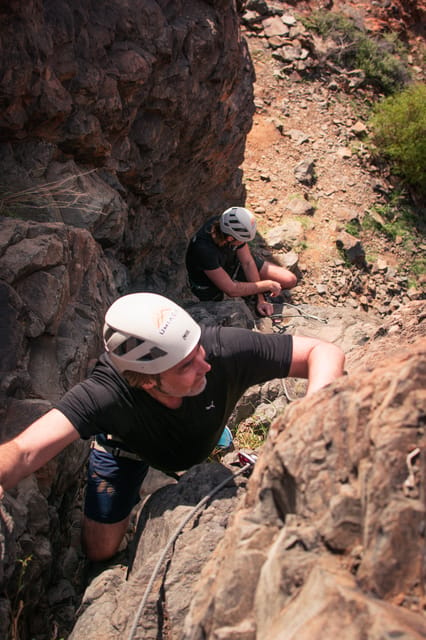
Before the first cable, you’ll do an approach walk of about 30 minutes to reach the start. This isn’t just “warming up.” It’s your moment to check your footing, settle your nerves, and confirm your clothing and shoes feel right.
Why that matters: many people underestimate the mental load of via ferrata. You don’t just climb once—you climb after a walk, with sun overhead, then you hang on cables where you can’t totally relax. The approach is short enough to keep it fun, but long enough to set the tone.
Practical tip: wear long pants and closed-toe shoes you trust on uneven ground. You’ll be asked to move carefully, and bare legs plus rough rock is a bad combo. Bring a daypack if you have water and small essentials; you’ll also get a bottle of water included, but it’s smart to bring your own habits, like how often you like to sip.
Entering the ferrata: how medium difficulty works in real life
Once you’re inside the via ferrata route, your guide helps you manage the day. The course is designed with protected sections—fixed cables and safety devices—so the challenge comes from balance, grip, and decision-making, not from figuring out how to rig yourself.
A key detail: you can often choose different paths depending on your level and the group. That means medium doesn’t automatically mean the same hardest line for everyone. If you want a bigger challenge, you’ll have options. If you want to build confidence first, you can usually find a way to progress without jumping straight into the scariest-looking moves.
Sea views play a role here too. Instead of staring at the next metal rung only, you’ll get moments where the view pulls you outward. That helps break up the “tunnel vision” effect you can get on vertical routes.
Monkey Bridge: the crossing that turns nerves into a story
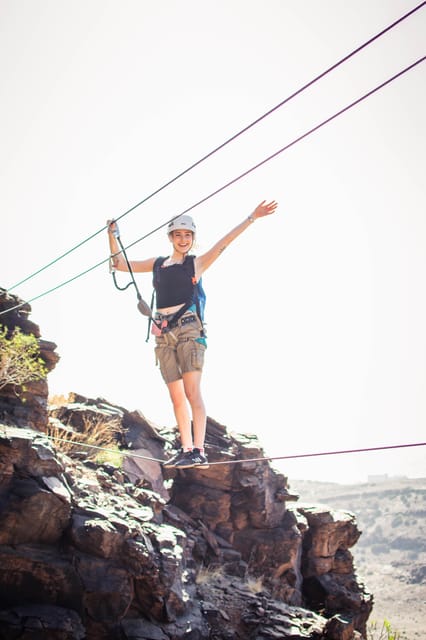
Midway through the route, you’ll hit the Monkey Bridge. Bridges are where via ferrata becomes real in a hurry—your legs feel it, your balance gets tested, and you suddenly understand why the equipment matters.
The good news is that this is exactly the kind of feature that makes the experience feel like an event, not a workout. Even if the harder moves aren’t your thing, crossings like this tend to be rewarding because you can focus on technique: steady pace, calm body position, and one deliberate step at a time.
Also, this is usually when your confidence starts climbing faster than the cables. You’ve already done enough to understand the rhythm. Then you’re halfway done, and the route says: yes, you can handle this.
The swing: a short adrenaline hit with a big reward
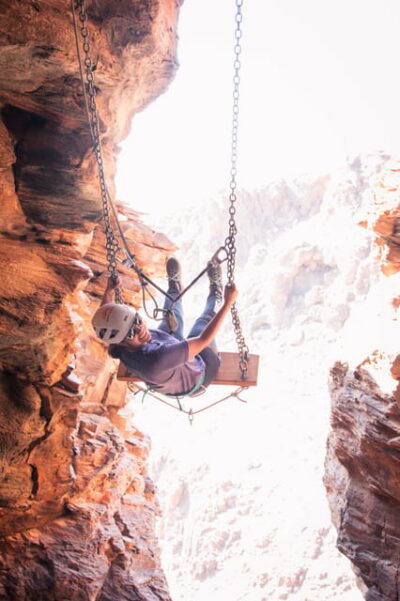
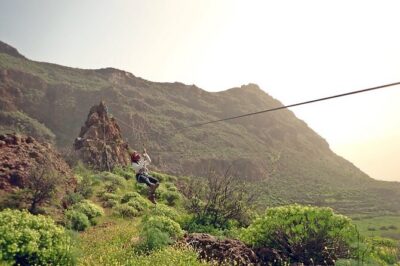
Further along, the route includes a swing. It’s one of those moments that instantly creates a “worth it” feeling because it’s fun, not just strenuous.
Why it works: a swing breaks the monotony. If your brain is tired from careful climbing, a short burst of playful motion can reset you. And since this via ferrata includes sea views, the swing section tends to feel like a mini postcard moment—movement with scenery.
If you’re the cautious type, don’t treat the swing as an emergency. Treat it like a controlled step. Your guide is there for a reason, and your job is to follow the instructions and keep your body in a stable position.
Finishing and the return walk: getting the legs back under you
After you finish the ferrata portion, you return by foot to the starting area. Expect roughly 30 minutes back to the parking lot.
This return part matters more than people think. You’ll likely feel the day in your hands and legs. That’s normal. Your goal is to walk steadily and avoid turning the return into a speed contest.
One more reason I like this route structure: you don’t just climb until you’re drained and then call it done. You get a clear finish point, then a short descent-style walk back where you can breathe and soak in the sea again.
Gear, guides, and safety: what’s actually included
The activity includes the services and materials you need for via ferrata, plus qualified guides. You also get RC and ACC insurance, which is the kind of boring detail that makes the whole experience feel calmer.
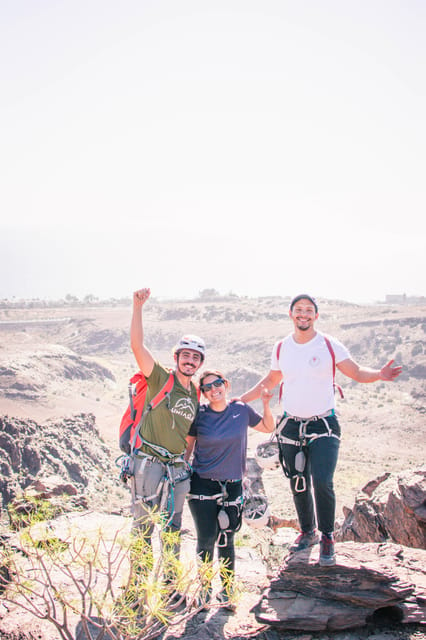
The included photographic report is also a real value add. Climbing is intense. The second you focus on your phone, you lose time and attention. With professional photos included, you get a record of the best moments without sacrificing safety.
You’ll also receive an energy bar and an individual bottle of water. That’s simple, but it helps the day stay smooth—especially if you’re coming from a drive and didn’t plan a snack.
In short: the setup is built to keep you focused on climbing, not improvising.
What to bring (and what to skip) so you don’t lose time
You’re responsible for your personal comfort items. Bring:
- Comfortable shoes (closed-toe)
- Long pants
- Sunscreen
- Drinks and a reusable water bottle
- Comfortable clothes plus a daypack
You should also follow the no-go items:
- No alcohol or drugs
- No smoking
- No drones
- No littering
- No bare feet
- No weapons or sharp objects
This matters because it’s not just “rules for rules’ sake.” On a via ferrata, the wrong footwear or clothing can turn small discomfort into big problems fast. And sun is real here—plan for it.
Price check: is $82 worth it for 4 hours?
At $82 per person for about 4 hours, the price can feel either fair or steep, depending on what’s included. Here’s what you’re really paying for:
- Guides to match you to the right sections and keep the day safe
- All activity-specific equipment so you don’t show up unprepared
- Insurance (RC and ACC) that adds peace of mind
- A professional photo report, which you’d otherwise pay for
- Energy bar and water, which keeps the day from getting chaotic
For me, this pricing works because you’re not paying just for “access.” You’re paying for a guided, safety-managed climbing experience with documentation afterward. That combination is hard to recreate on your own, especially as a first-time via ferrata climber.
If you’re already comfortable climbing and have gear, you might think you can DIY it. But for a first go, the value is the safety structure and the coaching that helps you choose the right line.
Who should do Amor y Odio (and who should not)
This isn’t for everyone, and the operator lists strict limits. It’s not suitable for children under 14, and height limits apply too. It also isn’t for anyone who’s pregnant, has back problems, mobility impairments, heart problems, respiratory issues, epilepsy, or recent surgeries.
One category I’d take seriously is fear and health-based risk:
- People with vertigo should avoid it.
- People with pre-existing medical conditions should confirm suitability before booking.
- Those with low fitness can find it tough, since it includes the approach, the protected climb, and the return.
Weight and age limits are listed as well, including people over 287 lbs (130 kg) and age ranges that make it clear they’re protecting participants.
If you’re a generally healthy adult who can handle heights and you’re comfortable walking for about an hour total (approach plus return), this is a great “step up” activity. If you’re unsure, don’t gamble. Via ferrata is physical and mental, and the route is medium for a reason.
Should you book this via ferrata in Gran Canaria?
I think you should book Amor y Odio if you want a guided via ferrata with sea views, a clear route structure, and memorable features like the Monkey Bridge and swing. The small group size (max 9) and the included gear and safety setup make it feel controlled enough to enjoy instead of fear.
Skip it if heights make you panic, or if any of the listed health conditions apply. Don’t treat the “medium” rating as a guarantee of ease. Medium via ferrata still asks you to work with cables, balance, and nerve management for several hours.
If you want to leave with stories, photos, and real confidence, this is a solid pick—especially with guides like Aron described as strong on both climbing guidance and local context.
FAQ
How long is the Gran Canaria Amor y Odio via ferrata?
The experience lasts 4 hours.
Where do we meet for the activity?
You’ll meet at a parking area just behind the Bahia Feliz bus stop.
What’s included in the price?
Included are services and materials, all specific activity equipment, qualified guides, RC and ACC insurance, a professional photographic report with high-quality images, an energy bar, and an individual bottle of water.
What should I bring?
Bring comfortable shoes (closed-toe), long pants, sunscreen, drinks, water (a reusable bottle is recommended), comfortable clothes, and a daypack.
Are there age and height restrictions?
Yes. The activity is not suitable for children under 14, and there are multiple height limits listed (for different minimum thresholds). There are also weight limits listed.
What languages do the guides speak?
The guides speak Italian, English, and Spanish.
More of the Gran Canaria Ledger
- Las Palmas: Weekly Pub Crawl★ 4.8 · 27 reviews
- Las Palmas: Art and Brunch Painting Experience★ 4.9 · 8 reviews
- Las Palmas: Art and Wine Experience★ 5.0 · 6 reviews
- From Las Palmas: Half day tour Volcano Bandama & Vineyard★ 4.3 · 4 reviews
Fresh on the Gran Canaria List
- Gran Canaria: Paragliding Flight with Tapas & Pickup
★ 5.0 · 3 reviews - Gran Canaria : Vía Ferrata “Amor & Odio” – Medium level
★ 5.0 · 3 reviews - From Las Palmas: Half day tour Volcano Bandama & Vineyard
★ 4.3 · 4 reviews - From the South: Excursion to Las Palmas de Gran Canaria + Poema del Mar (optional)
★ 5.0 · 4 reviews - Las Palmas: Art and Wine Experience
★ 5.0 · 6 reviews - Las Palmas: Art and Brunch Painting Experience
★ 4.9 · 8 reviews
Rock Climbing & Ferrata Routes, compared.
 ★ 4.9Guided Via Ferrata ExcursionFrom $82198 reviews
 ★ 5.0Via Ferrata in Gran Canaria. Vertical adventure park. Small groupsFrom $78183 reviews
 ★ 4.9Cliff Climbing Via Ferrata Trip by MaspalomasFrom $82177 reviews
 ★ 5.0Climbing + Zipline + Via Ferrata + Cave. Adventure route in Gran CanariaFrom $84149 reviews
 ★ 5.0Top Vía Ferrata for Beginners in Gran Canaria ツFrom $102112 reviews
 ★ 5.0Via Ferrata Gran Canaria: Adventure Route for First Time ClimbersFrom $8366 reviews
 ★ 5.0Rock Climbing from Beginners to Experts – Small Groups ツFrom $9661 reviews
 ★ 4.9Las Palmas: Coastering, Via Ferrata, Water Jumping & SnorkelFrom $8240 reviews
Browse the lists this tour appears in