
Reviewed · ROQUE NUBLO & MOUNTAIN HIKES
Tejeda: Sunset & Night Sky Guided Astronomy Hiking Tour
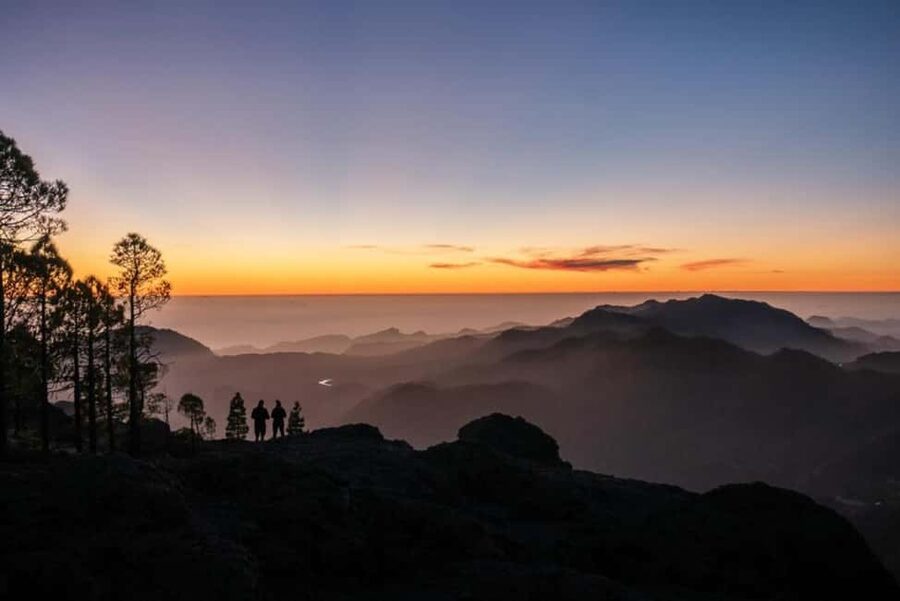
Stars start talking when the sun drops. This Tejeda sunset trek ends at Ventana del Nublo, where you watch the light fade over Roque Nublo and Teide, then switch gears to a guided night-sky lesson.
I like the way the Camino de Santiago de Gran Canaria walk builds suspense step by step, and I especially love Pablo’s approach to astronomy. He keeps it practical, uses a screen to explain concepts, and helps you actually spot constellations and the Milky Way.
One thing to plan for: it gets cold when you’re standing still after dark, and you’ll need a car to reach the meeting area since public transport doesn’t work in these zones.
In This Review
- Key highlights you’ll care about
- Tejeda’s sunset-to-stars switch: why this tour feels special
- Getting there: your own car is the real deal
- The hike itself: Camino de Santiago de Gran Canaria to the Ventana
- Ventana del Nublo at sunset: Roque Nublo and Teide in one view
- Pablo’s astronomy lessons: constellations, planets, and the Milky Way
- How to enjoy the sky with your eyes (even after the tour)
- Snacks, hot drinks, and the comfort plan for cold nights
- Group size and language: small and personal, not rushed
- Price and value: why $71 can be worth it
- Weather and timing: what to expect when skies don’t cooperate
- Who this tour is best for (and who should skip it)
- Should you book Tejeda Sunset & Night Sky Astronomy?
- FAQ
- Where do we meet for the Tejeda sunset and night sky tour?
- How long is the tour?
- Do I need a telescope for this activity?
- Is there a transfer service to the meeting point?
- What should I wear or bring?
- What is included in the tour?
- What can I expect to see in the sky?
- What languages are available with the guide?
- Does the tour ever change dates due to weather?
- If I need to cancel, is there a refund?
Key highlights you’ll care about
- Ventana del Nublo sunset views with Roque Nublo and Teide in the background
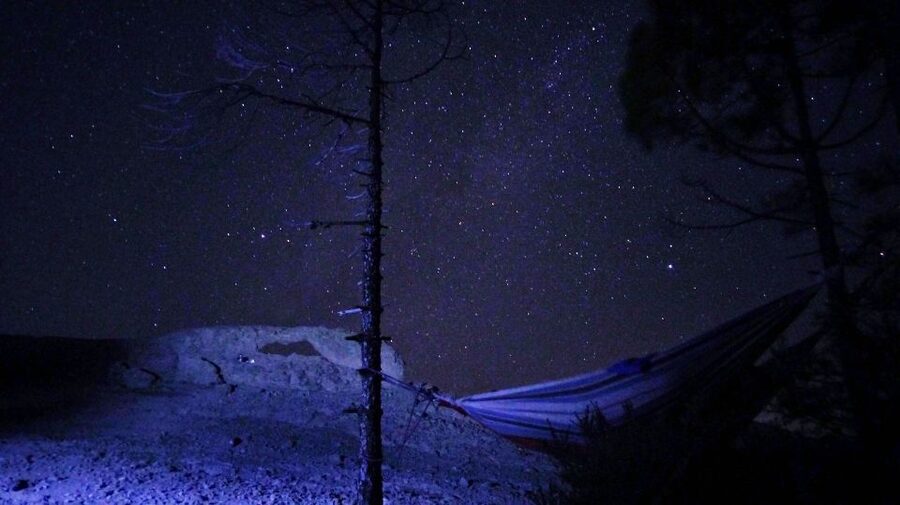
- A guided night-sky session focused on constellations, planets, and the Milky Way
- No telescope needed: you learn how to identify what you see with binoculars and your eyes
- The forest-to-night experience as the trail shifts from day to dark
- Snacks, hot drinks, and a blanket so you can stay comfortable during observing time
- Small group size (max 10) with Spanish or English guidance
Tejeda’s sunset-to-stars switch: why this tour feels special
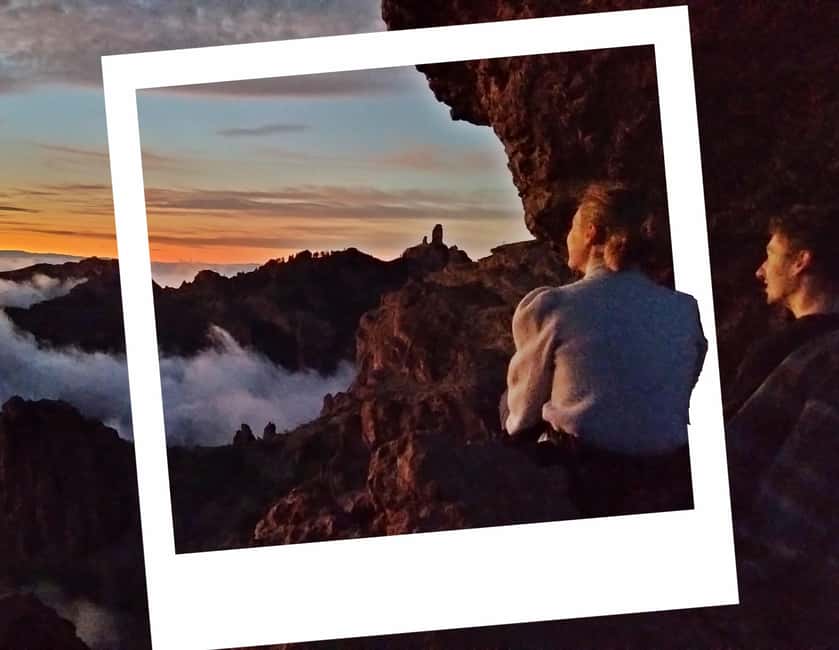
Gran Canaria night skies can be seriously impressive, but you only get the full effect if you’re in the right place at the right time, with the right instructions. This is built around that simple idea: hike to an iconic viewpoint as the sun sets, then slow down and learn the sky while it’s still fresh in your mind.
What makes this tour work well is the pacing. You’re not just “shown stars.” You’re guided through a transition: the forest changes, the horizon darkens, and then the sky comes into focus. That matters because stargazing is easier when you understand what you’re looking at. You spend less time guessing and more time enjoying.
The best part for me is the blend. You get the outdoors part (the walk and views), plus a very hands-on astronomy lesson that doesn’t require fancy gear. Pablo’s passion comes through in how he explains things in a way you can repeat later.
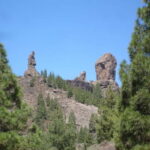
Higher into the cumbre, more walks to the peaks
Getting there: your own car is the real deal
Here’s the first practical note that can make or break your evening: public transport doesn’t work in these zones. There’s no transfer offered, and you’ll need your own car to reach the meeting point.
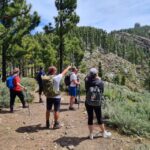
You meet at the campground area where you can park. From there, the route heads out through the Camino de Santiago de Gran Canaria toward the Tejeda area viewpoint. Plan to arrive with a little buffer, because this tour is timed around sunset and darkness. If you show up late, you’ll miss the best light—and the learning will start without you catching the buildup.
If you’re staying on the coast, you’ll want to make sure your rental car plan is solid and you’re comfortable driving back after dark. The good news: once you’re there, you don’t have to worry about logistics mid-tour.
The hike itself: Camino de Santiago de Gran Canaria to the Ventana
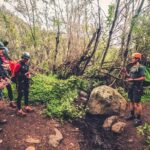
The route starts from the center of the island area, surrounded by mountains. Then you trek through the Camino de Santiago de Gran Canaria, which is one of the best-known walking routes on the island. That gives the experience a real sense of place. You’re not just walking in circles for views. You’re moving along a route that already has identity.
As you hike, you’ll feel the weather and temperature shift. It’s daylight at first, but the air cools as you climb and then as you settle into the evening. You’re also walking through a forest section, which changes the soundscape and the feel of the group. During the darker part, it’s natural to speak less and keep your attention on what the guide is pointing out.
Terrain-wise, this is a guided hiking experience, so you’ll want hiking shoes and clothing that works for chilly, windy stops. The tour lasts about 3 hours, so it’s not a long multi-day trek. Still, it’s long enough that comfort matters.
Ventana del Nublo at sunset: Roque Nublo and Teide in one view
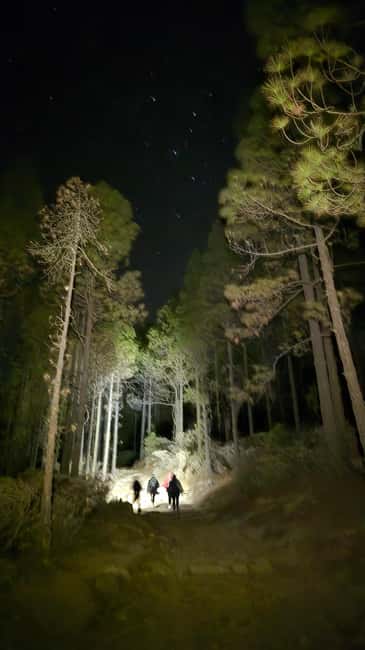
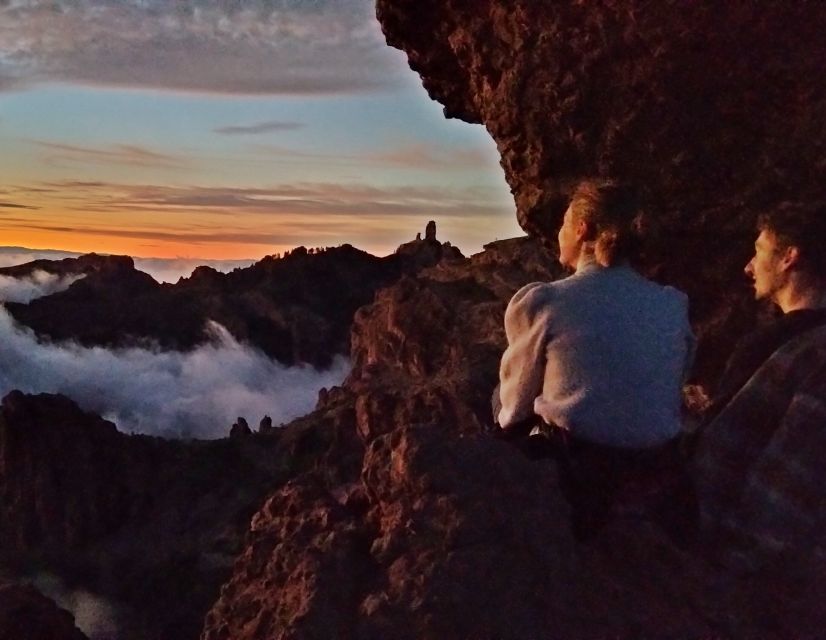
The big moment is arriving at one of Tejeda’s most iconic lookouts: Ventana del Nublo. This is where the sky starts doing its thing.
As the sunset unfolds, your guide will share basic astronomy concepts while you’re still surrounded by wide open views. You’ll be able to see Roque Nublo and also Teide in the wider panorama, which helps anchor the experience. It’s much easier to understand directions and the movement of the sky when you have strong landmarks.
What I like here is the “learn while you look” rhythm. You’re not waiting until it’s fully dark to start understanding what’s ahead. You get to build mental maps as the sky darkens, then the night-sky session becomes clearer instead of random.
Potential drawback: you’ll be standing still for observing time. That’s great for star watching, but it means you’ll feel the cold more than you would on a purely active hike. Bring warm layers, not just a light jacket.
Pablo’s astronomy lessons: constellations, planets, and the Milky Way
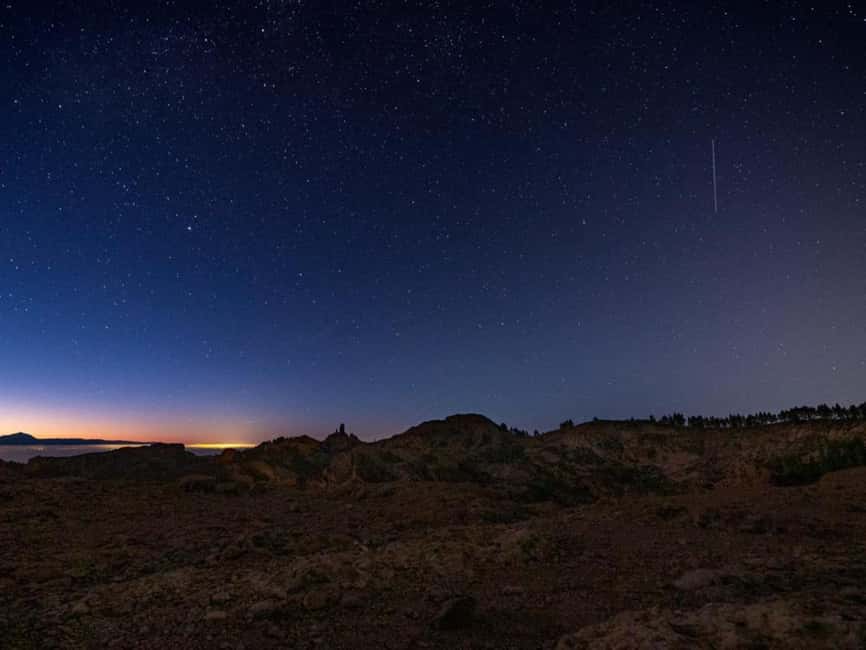
Once the sun sets, the tour shifts from walking to observing. This is where the tour earns its ticket price.
You’ll learn how to identify:
- Constellations
- Planets (as visible from your vantage)
- The Milky Way
A key detail is that telescopes aren’t used. Instead, you’re given binoculars and a screen that explains concepts. That combo pushes you toward real understanding, not just “seeing through gear.” It’s the difference between a one-time photo moment and something you can do again.
The guide’s style also helps. In past experiences with this setup, Pablo has been praised for making everything feel personal and engaging, including linking the sky to what you can notice around you. On this tour, he also shares information about the area’s history and natural surroundings, so you’re not only focused on stars. You get a fuller evening, not a straight lecture.
Practical note: night sky identifying takes patience. If you expect instant recognition of every constellation, you’ll be frustrated. But if you’re willing to follow along and keep your eyes on the guide’s pointers, it clicks faster than you think.
More lanes through Teror, Arucas and the north
How to enjoy the sky with your eyes (even after the tour)
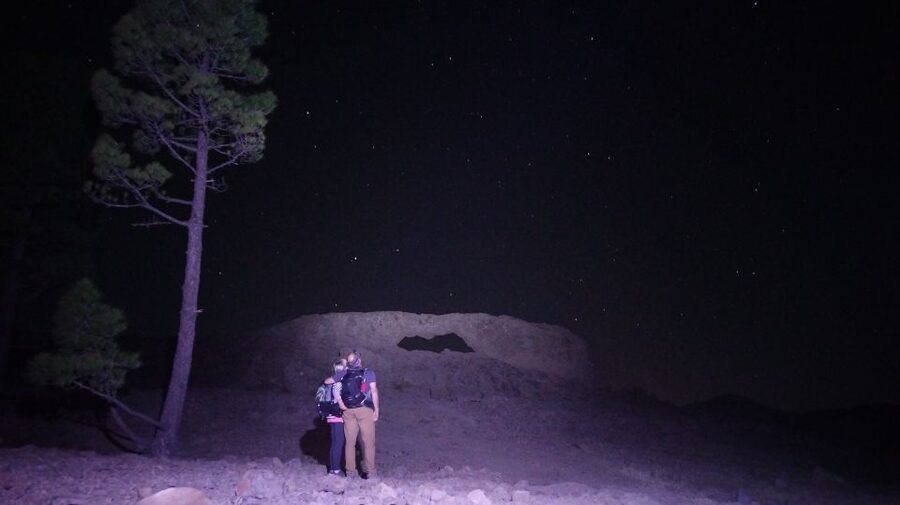
The tour is designed so you can continue afterward. You’re taught basic concepts for interpreting what you see, so you can enjoy the night sky on your own without a telescope and with whatever you have on hand.
That’s valuable, because stargazing is partly about conditions and timing, and partly about knowing where to look. This kind of guidance helps you:
- Understand how constellations relate to directions
- Recognize patterns you can return to
- Spot the Milky Way’s band when the sky is clear enough
You’re also given a blanket and a light for the experience. That makes a difference because fully fumbling with phones or flashlights can ruin your night adaptation. With the gear provided, you’re less likely to accidentally blast your own night vision.
If you do this once, you’ll likely feel tempted to do it again. That’s the point. The tour gives you enough structure that your next night outing turns from guesswork into recognition.
Snacks, hot drinks, and the comfort plan for cold nights
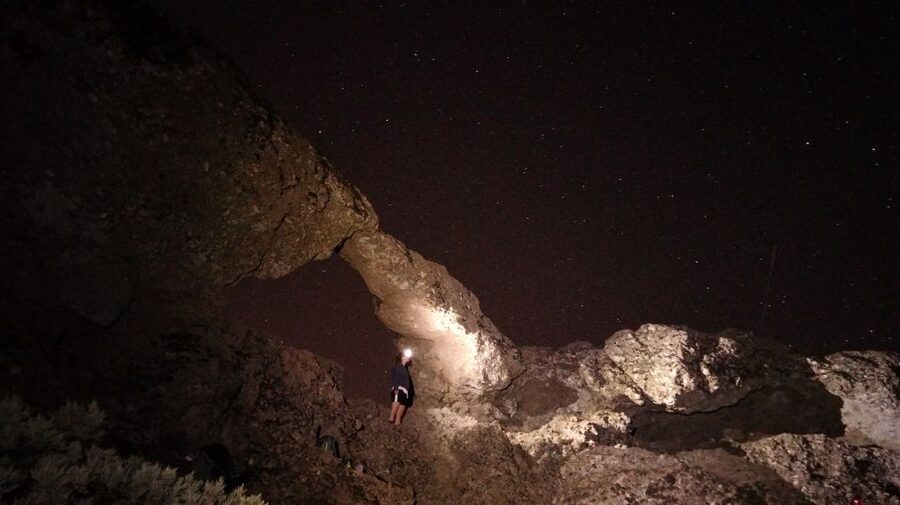
This is one of those details that sounds minor until you’re watching stars with your hands half-frozen. You get snacks and hot drinks during the observing time. You’ll also have a blanket, and the guide uses a screen for explanations.
Bring the right kind of warmth. From what people emphasize in feedback, the cold hits fast when you’re stationary. You’ll want warm layers and clothing that stays comfortable when damp air and wind creep in.
My practical recommendation: wear hiking layers you can move in, plus something warmer you can keep on while you stop. If you only bring a light jacket, you’ll likely regret it within the first observing stretch.
Group size and language: small and personal, not rushed
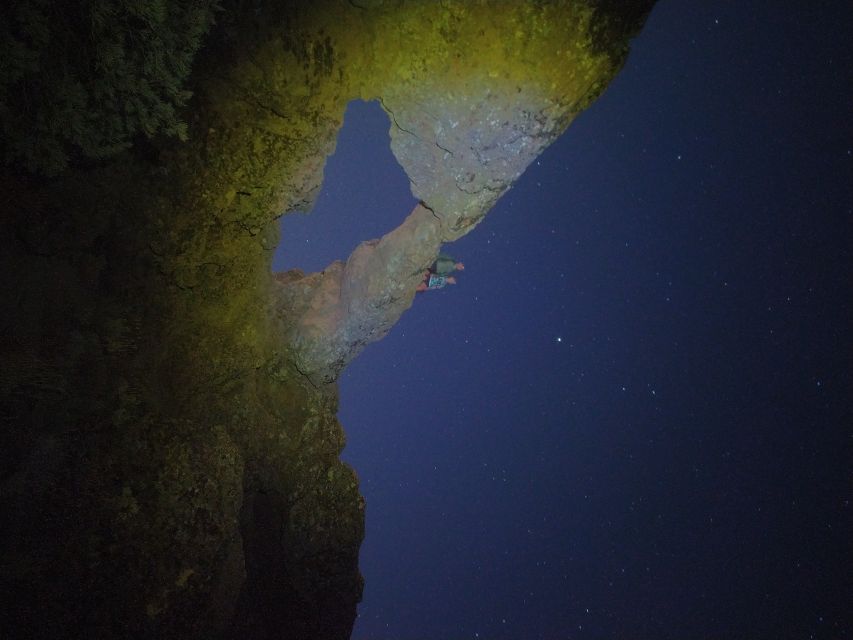
This is a small group tour limited to 10 participants. That smaller size matters during stargazing. It’s easier to see what the guide is pointing out, and you get more attention during explanations.
Language options are Spanish and English, depending on the guide. That’s important because astronomy terms and sky directions can get confusing. When you understand the explanation clearly, you actually enjoy the observing part instead of feeling lost.
Duration is about 3 hours, which is long enough to include sunset, hiking, and a full night-sky session. It’s short enough that you’re not locked into a whole evening with limited time flexibility.
Price and value: why $71 can be worth it
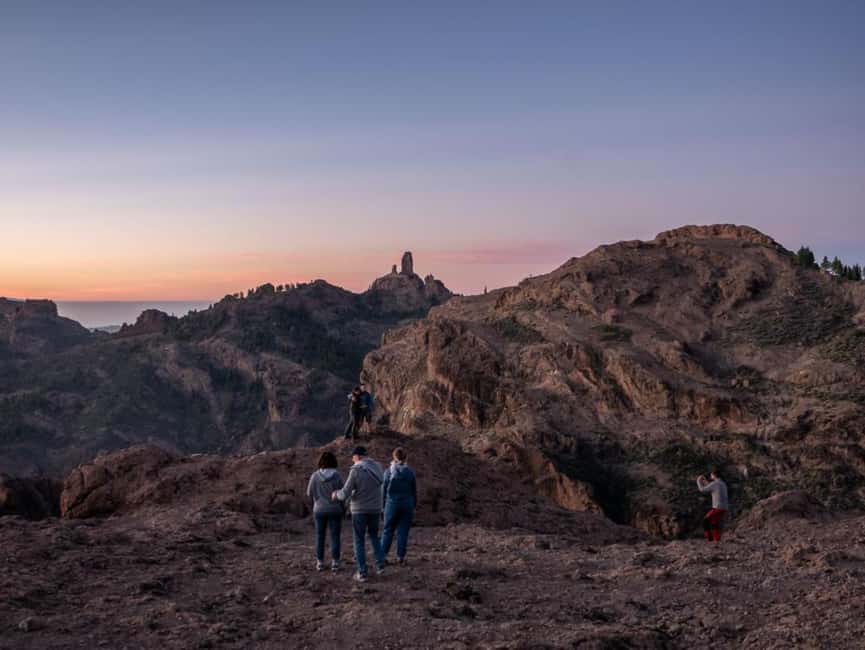
At about $71 per person for a 3-hour guided hike plus a night-sky education, this isn’t a budget “walk and photos” add-on. It’s more like an evening class in the outdoors, guided by someone who knows how to translate the sky into human terms.
Where the value comes from:
- You get real guidance for recognizing what you see, not just access to a viewpoint
- Gear support includes binoculars and a blanket, plus a screen to explain concepts
- Time is curated around sunset and darkness, when stargazing actually works
The cost makes more sense if you care about understanding the sky and you’re not just chasing a pretty sunset photo. If that’s your goal, you’ll probably feel satisfied. If you’re looking for a casual stroll with no learning component, you might feel it’s more structured than you expected.
Also, keep in mind the logistics: you’ll be using your own car, and there’s no transfer. That’s part of the overall value picture, since you’re paying for an experience in a place that doesn’t serve well for public transport.
Weather and timing: what to expect when skies don’t cooperate
The tour notes that weather conditions may require a change of date. That’s common for stargazing, and it’s also fair. Cloud cover or poor visibility can make the astronomy part less effective, so the operator may adjust.
Plan for this by keeping your evening flexible. The tour also has a free cancellation window up to 24 hours in advance, which gives you a bit of peace of mind if you’re coordinating this with other plans on the island.
Who this tour is best for (and who should skip it)
This is a strong fit if you:
- Want a guided stargazing experience with clear learning goals
- Like hiking that’s not too long, but still feels like an outing
- Enjoy pairing scenery (Tejeda viewpoints) with a real activity (astronomy)
- Are traveling as a couple or a small group and want a shared, calming evening
It’s less ideal if you:
- Hate cold evenings or don’t want to dress for staying still
- Don’t have a car and can’t realistically get to remote meeting points
- Expect a telescope show or a purely photo-based experience
If you’re a first-time stargazer, this is a great starter. If you’ve done stargazing before, you’ll still appreciate the emphasis on identification and how to keep using your eyes later.
Should you book Tejeda Sunset & Night Sky Astronomy?
I’d book it if you want more than a viewpoint stop. The combination of a sunset hike to Ventana del Nublo, then a practical night-sky lesson about constellations, planets, and the Milky Way, is exactly the kind of experience that leaves you with skills, not just photos.
Skip it only if the logistics will stress you out. The big limiter is transportation: you need your own car, and public transport doesn’t work there. Also dress like you mean it for the cold, because the observing time is real.
One more thought: this tour is offered by RockNatour, and it’s limited to small groups. If it’s full, the operator says there’s a waiting list. That’s worth using if your dates are flexible.
FAQ
Where do we meet for the Tejeda sunset and night sky tour?
You meet at the campground area in the meeting point zone. You can also park there.
How long is the tour?
The experience lasts about 3 hours.
Do I need a telescope for this activity?
No. Telescopes are not used. You’ll have binoculars and a screen for explaining astronomy concepts.
Is there a transfer service to the meeting point?
No transfer is available. You’ll need your own car to reach the meeting point, since public transport doesn’t work in these zones.
What should I wear or bring?
Wear warm clothing and hiking shoes. You’ll also be provided with a blanket, but you should still dress for cold night observing.
What is included in the tour?
Included are the guided astronomy hike, blanket, light, snack and hot drink, binoculars, and a screen for explaining astronomy concepts.
What can I expect to see in the sky?
You’ll learn how to identify constellations, planets, and the Milky Way during the night-sky part of the tour.
What languages are available with the guide?
The live guide offers Spanish and English.
Does the tour ever change dates due to weather?
Yes. Depending on weather conditions, the activity could require changing the date.
If I need to cancel, is there a refund?
Yes. You can cancel up to 24 hours in advance for a full refund.
More of the Gran Canaria Ledger
- Gran Canaria: Catamaran Dolphin Watch Cruise with Snorkeling★ 4.4 · 4,761 reviews
- Maspalomas: Guided Camel Ride in the Maspalomas Sand Dunes★ 4.4 · 4,526 reviews
- Poema del Mar Skip-the-Line Ticket★ 4.8 · 3,856 reviews
- Puerto de Mogán: Submarine Tour★ 4.4 · 3,792 reviews
Through Teror and the Northern Villages
- South Gran Canaria: Off-Road Valleys & Villages Jeep Tour★ 4.5 · 1,200 reviews
- Gran Canaria: Rural Villages Guided Sightseeing Tour★ 4.6 · 661 reviews
- Firgas, Tejeda, Guayadeque – VIP Tour Gran Canaria★ 4.5 · 173 reviews
- Arucas, Teror, Viewpoint Roque Nublo – Highlights Gran Canaria★ 4.5 · 170 reviews
Up to Roque Nublo and the Peaks
- The Volcano Heart Tour: Hiking, Tasting and Sunset Experience★ 5.0 · 1,120 reviews
- From Palmas: Pico de las Nieves & Roque Nublo Full-Day Trip★ 4.6 · 1,076 reviews
- Canyoning with Waterfalls in the Rainforest – Small Groups ツ★ 5.0 · 430 reviews
- Gran Canaria: “Peaks of Gran Canaria” Hiking Tour★ 4.9 · 295 reviews
Fresh on the Gran Canaria List
- Gran Canaria: Highlights & hidden gems with Sky Rebels
★ 5.0 · 3 reviews - Escape room “The gratest show on earth” at Holidayworld
★ 3.9 · 3 reviews - Wanderungen im grünen Gran Canaria
★ 5.0 · 3 reviews - 2 hours Double Pass Spa Circuit in Hotel Don Gregory
★ 3.5 · 3 reviews - Las Palmas Maspalomas Gran Canaria Salsa Lovers Dance Experience
★ 5.0 · 3 reviews - Traditional Market Day and San Mateo & Teror
★ 3.5 · 3 reviews
Roque Nublo & Mountain Hikes, compared.
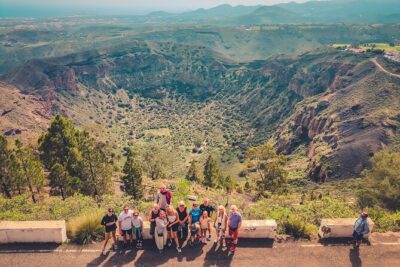 ★ 5.0The Volcano Heart Tour: Hiking, Tasting and Sunset ExperienceFrom $1191,120 reviews
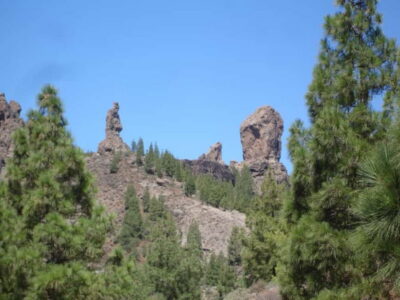 ★ 4.6From Palmas: Pico de las Nieves & Roque Nublo Full-Day TripFrom $571,076 reviews
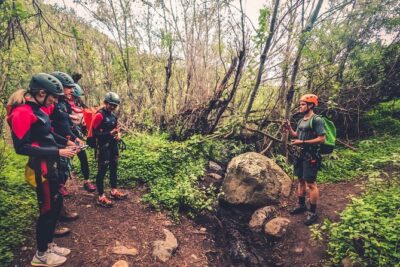 ★ 5.0Canyoning with Waterfalls in the Rainforest – Small Groups ツFrom $102430 reviews
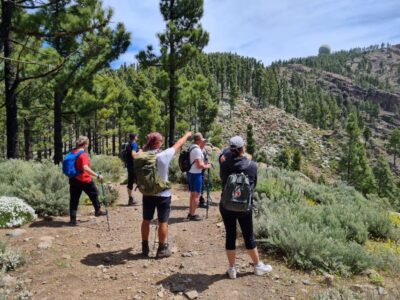 ★ 4.9“Peaks of Gran Canaria” Hiking TourFrom $82295 reviews
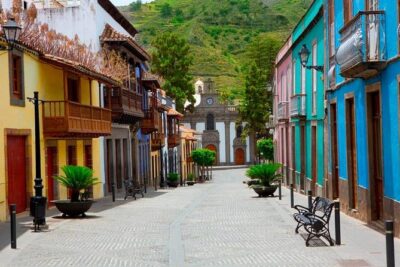 ★ 4.5Arucas, Teror, Viewpoint Roque Nublo – Highlights Gran CanariaFrom $53170 reviews
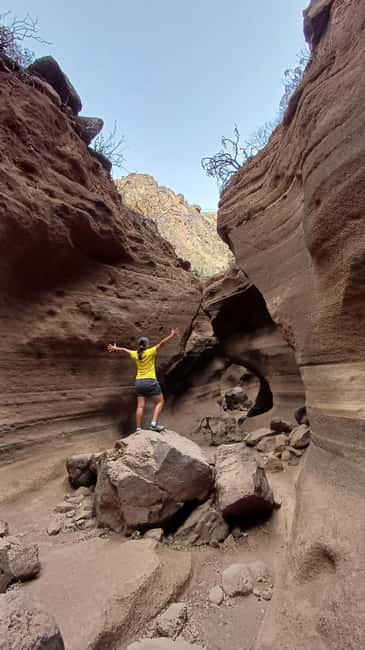 ★ 4.9Maspalomas: Barranco de las Vacas & Caves with Sky RebelsFrom $86144 reviews
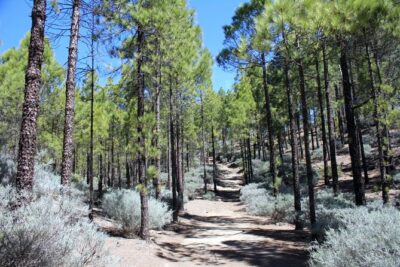 ★ 5.0Full day Hiking Gran Canaria Peaks of Gran CanariaFrom $84130 reviews
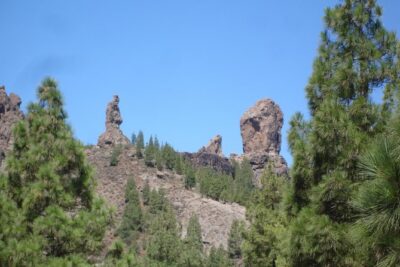 ★ 4.5Gran Canaria Peaks Full-Day Tour from Las PalmasFrom $62126 reviews
Browse the lists this tour appears in