
Reviewed · SCUBA DIVING COURSES & DIVES
Las Palmas: 2-Day Padi Scuba Diving Course
A two-day course can still feel calm. This one uses a heated pool first, then takes you to Gran Canaria waters with a very small group.
I like the clear beginner structure, and I also like that you get the full PADI certification process covered in the price. The main thing to consider is that it’s not suitable if you’re pregnant or have pre-existing medical conditions, and meals aren’t included.
The strongest positive signal from the feedback is the team’s friendly, careful attention. Everything runs like it’s designed to keep you comfortable and confident while you learn.
One practical drawback: mornings are busy and the day ends around 2:00PM, so you’ll want a plan for afternoons—and food and drinks are on you.
In This Review
- Key Things I’d Focus On Before You Go
- Las Palmas and Gran Canaria: why this 2-day PADI course works for beginners
- Blue Water Diving and the small-group feel (max 4)
- Day 1 in the heated swimming pool: your first three training sessions
- Theory check-in: your open water diver manual
- What to bring for Day 1
- Day 2 in Gran Canaria waters: two ocean sessions where skills actually matter
- How to think about Day 2 pacing
- Certification: the PADI Scuba Diver outcome and the 12-meter limit
- Price and value: what $371 covers (and what you’ll pay separately)
- What’s not included: plan for meals
- Who gets the best value from this course
- What the schedule really feels like: 8:30AM to 2:00PM
- Who this course is best for (and who should skip it)
- Should you book this 2-Day PADI course in Las Palmas?
- FAQ
- What certification do I get after the course?
- How deep can I go with this certification?
- What happens on Day 1?
- What happens on Day 2?
- Is equipment included in the price?
- Are meals included?
- What’s the group size?
- What should I bring?
Key Things I’d Focus On Before You Go
- Heated pool training first: three skill sessions on Day 1 in a safe, controlled setup
- Two ocean check-out sessions on Day 2: you apply what you learned, with Gran Canaria marine life on offer
- Small group size (max 4): more coaching time, less waiting around
- Everything needed is included: equipment hire, manual, and certification fees are in the $371 price
- Course timing that gives you afternoons back: about 8:30AM–2:00PM each day
- Clear certification outcome: PADI Scuba Diver, with a depth limit of 12 meters
Las Palmas and Gran Canaria: why this 2-day PADI course works for beginners
Las Palmas sits in the Canary Islands, and this kind of beginner scuba qualification course is built around one smart idea: you practice skills where things are controlled, then you bring those skills into open water. For most first-timers, that approach makes a big difference. You’re not guessing what to do while also adapting to the ocean at the same time.
The schedule is also friendly. Each day runs roughly 8:30AM to 2:00PM, so you’re not burning your whole trip on training. That’s time you can spend relaxing after the sessions, or doing normal tourist stuff with less fatigue.
Also, the instruction team offers English and Spanish. That matters if you want to ask questions and really understand what you’re being taught, not just follow along.
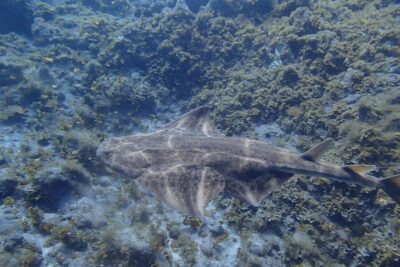
Down to the reef at El Cabron, more dives and courses
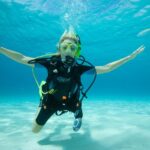
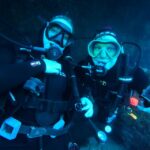
Blue Water Diving and the small-group feel (max 4)
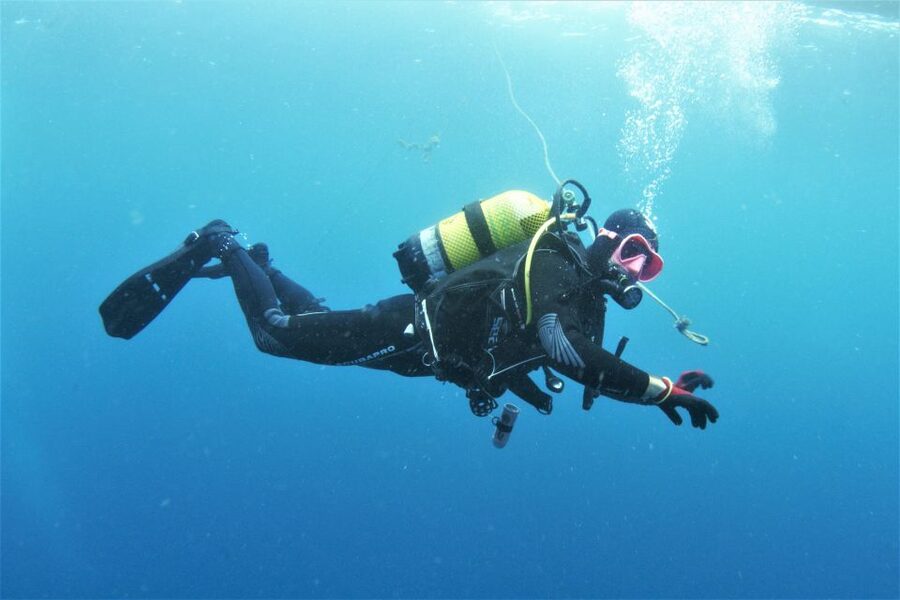
This course runs with a small group limited to 4 participants, led by experienced PADI instructors. In practice, that group size is about attention. When you have fewer people in the water (or lined up for equipment), you typically get faster feedback on your technique and comfort level.
It also tends to reduce stress for beginners. If you’re new to scuba gear, there’s a lot going on—mask fit, breathing rhythm, buoyancy control, and confidence. Smaller groups usually mean more time for the instructor to check details like you’re doing things correctly before moving on.
And the provider is Blue Water Diving, which is helpful to know because it gives you a clear, consistent point of contact for what to bring, how the equipment will be handled, and the flow of both days.
Day 1 in the heated swimming pool: your first three training sessions
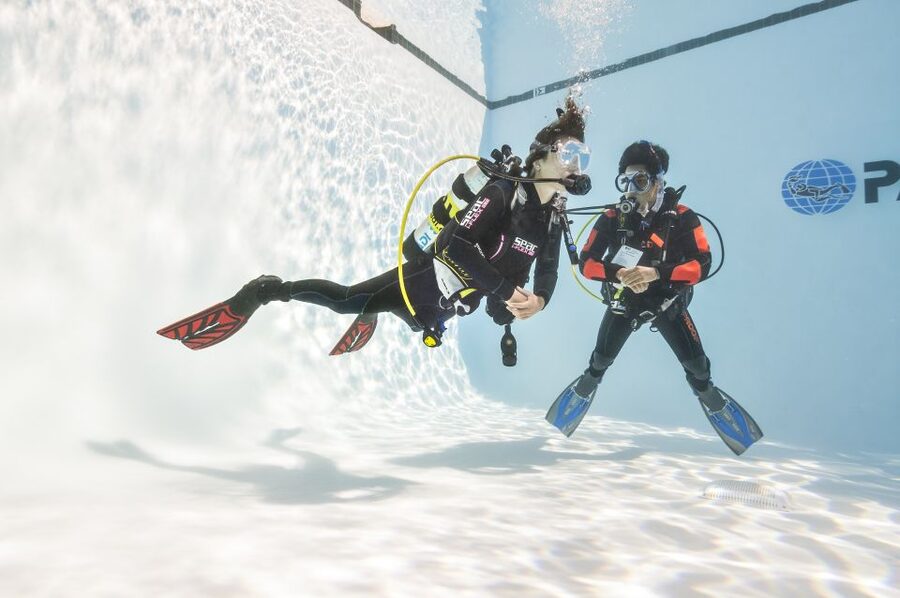
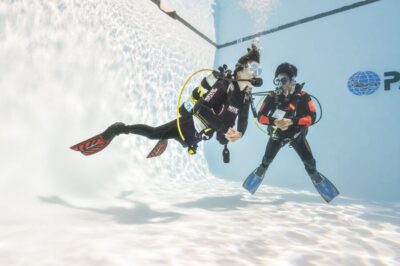
Day 1 is built around confidence. You start with training in a heated swimming pool onsite, where conditions are controlled and you can focus on fundamentals without the pressure of open water.
You’ll complete the first three training sessions there. Expect to work through core scuba skills in a way that’s meant to be step-by-step. This is the day where most beginners feel their biggest learning curve. But because it’s in a pool, it’s also the day where you can make mistakes safely, repeat key movements, and get corrected before you head out to the ocean.
What I like about this setup is that it turns the first day into skill-building, not sightseeing. You’re not split between trying to enjoy the experience and trying to figure out the basics. You’re learning.
Theory check-in: your open water diver manual
After your pool work, the instructors help you download your open water diver manual. You can do a bit of theory either at the scuba training center or back at your hotel.
That flexibility is practical. If you’re tired after pool sessions, you don’t have to cram reading immediately. And if your hotel room is quiet, you can do a small theory block at your pace. Just don’t ignore it—because the goal is certification, not just a fun try-out.
What to bring for Day 1
Bring swimwear and a towel. That’s it for the core items. Everything else—equipment hire, manual, and certification fees—is handled in the course setup.
More Gran Canaria trips that earn their spot:
Day 2 in Gran Canaria waters: two ocean sessions where skills actually matter
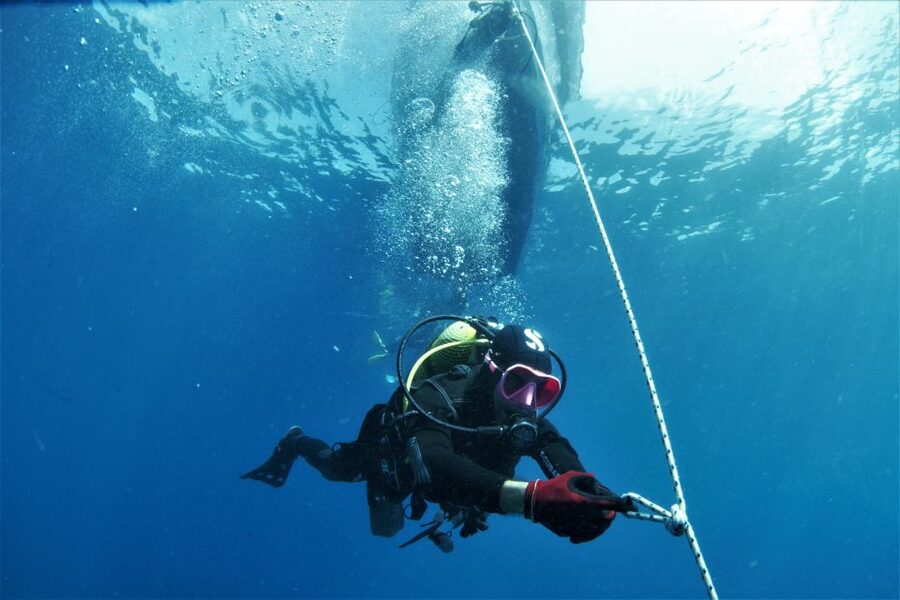
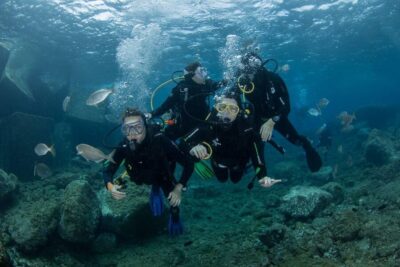
Day 2 is where the course becomes real. You head to the ocean and complete two open-water sessions. This is the part designed to connect pool training to real-world conditions.
The key value here is skill transfer. Those pool skills are meant to carry into open water: controlling buoyancy, handling breathing, and keeping calm while you move around in a new environment. Since you’ve already practiced in the pool, you’re not starting from zero when you’re in the ocean.
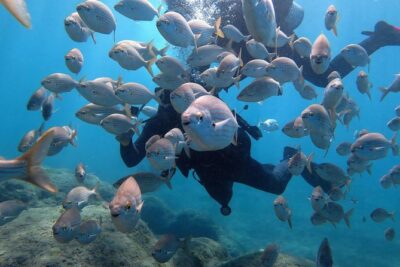
The course also promises you’ll get to enjoy beautiful marine life in Gran Canaria as you perform your training tasks. While you shouldn’t count on specific animal sightings, the whole point of choosing Gran Canaria for this kind of course is that the ocean environment is a natural classroom.
How to think about Day 2 pacing
Because the course still ends around 2:00PM, Day 2 isn’t a full-day slog. It’s long enough to complete what’s required, but not so long that your body and mind are cooked afterward. If you like having your afternoons back, this pacing is a plus.
Certification: the PADI Scuba Diver outcome and the 12-meter limit
When you successfully complete the course, you obtain PADI Scuba Diver certification. That’s a meaningful goal for a beginner because it gives you an official qualification—something you can build on later if you continue scuba training.
The certification allows you to dive to a maximum depth of 12 meters. For many new divers, this is a good starting ceiling. It also helps you choose the right type of future trips, because you’ll know your limits in advance.
One more thing to keep in mind: medical restrictions may apply, and the course is not suitable for children under 10 years or for pregnant women. Also, people with pre-existing medical conditions shouldn’t plan on taking it unless they’re cleared according to the medical rules that apply to scuba.
Price and value: what $371 covers (and what you’ll pay separately)
At $371 per person, this is priced like a real training course, not a casual taster. The value comes from what’s included:
- Equipment hire
- Manual and certification
- Local hotel pickup and drop off
So you’re not juggling extra rentals or surprise add-on fees for core training materials. That’s the kind of pricing that’s easy to budget for.
What’s not included: plan for meals
Food and drinks are not included. Since each day is about 8:30AM–2:00PM, you may want to bring your own snacks or decide where you’ll eat afterward. If you’re traveling with limited time for meals, that matters.
Who gets the best value from this course
You’ll usually get the best value if:
- you’re a true beginner who wants a structured path to a certification card, and
- you prefer small-group instruction instead of a big class where questions get buried.
If you already know the basics and just want extra time in the water, you might compare costs with other training options. But if you need a real credential quickly, this course is set up for that.
What the schedule really feels like: 8:30AM to 2:00PM
The timing is consistent both days: start around 8:30AM, finish around 2:00PM. That consistency helps you plan your trip day-by-day.
You also get a built-in rhythm:
- Morning: training and instruction
- Early afternoon: you’re done, free to relax
Because hotel pickup/drop-off is included, you don’t need to solve transport each morning. That reduces friction, especially if you’re staying in Las Palmas and want simple logistics.
Who this course is best for (and who should skip it)
This is best for you if you:
- want a two-day path to PADI Scuba Diver certification
- prefer a small group and structured coaching
- like the idea of practicing first in a heated pool, then moving to ocean sessions
It’s not a good fit if you:
- are pregnant
- are under 10 years old
- have pre-existing medical conditions (medical restrictions may apply)
If you’re on the edge health-wise, don’t guess. Use the scuba medical guidance that applies to you and check with the right professionals before planning any course.
Should you book this 2-Day PADI course in Las Palmas?
If you want a beginner certification that’s structured, small-group, and built around safety-first practice, I think this is a strong choice. The biggest reasons are the heated pool training first, the two ocean sessions on Day 2, and the fact that equipment, manual, and certification are included in the $371 price. Plus, the feedback points strongly toward a friendly, attentive team and an overall smooth experience.
Skip it if you fall into the clear restrictions (pregnancy, under 10, or pre-existing medical conditions) or if you’re expecting meals to be taken care of. And do plan for afternoons—since you’ll be done by about 2:00PM each day, that free time is part of the value.
FAQ
What certification do I get after the course?
After successful completion, you receive PADI Scuba Diver certification.
How deep can I go with this certification?
The PADI Scuba Diver certification allows diving to a maximum depth of 12 meters.
What happens on Day 1?
Day 1 takes place in a heated swimming pool onsite, where you complete the first three training sessions.
What happens on Day 2?
Day 2 is in the ocean, and you complete two open-water dives/sessions using skills practiced in the pool.
Is equipment included in the price?
Yes. Equipment hire is included, along with the manual and certification fees.
Are meals included?
No. Food and drinks are not included.
What’s the group size?
The group is small, limited to 4 participants.
What should I bring?
Bring swimwear and a towel.
Two Days Across the Island
- 2 Day PADI Scuba Diver Course in Puerto Rico, Gran Canaria★ 5.0 · 7 reviews
More of the Gran Canaria Ledger
- Gran Canaria: Catamaran Dolphin Watch Cruise with Snorkeling★ 4.4 · 4,761 reviews
- Maspalomas: Guided Camel Ride in the Maspalomas Sand Dunes★ 4.4 · 4,526 reviews
- Poema del Mar Skip-the-Line Ticket★ 4.8 · 3,856 reviews
- Puerto de Mogán: Submarine Tour★ 4.4 · 3,792 reviews
Down to the El Cabron Reef
- Scuba Diving Experience for Beginners in Gran Canaria★ 5.0 · 561 reviews
- Gran Canaria: Try Scuba Diving for Beginners★ 4.9 · 403 reviews
- Beginners Scuba Diving Experience in Gran Canaria★ 5.0 · 254 reviews
- Gran Canaria: Discover Scuba Diving – Free Transfers★ 4.9 · 115 reviews
Fresh on the Gran Canaria List
- Gran Canaria: Highlights & hidden gems with Sky Rebels
★ 5.0 · 3 reviews - Escape room “The gratest show on earth” at Holidayworld
★ 3.9 · 3 reviews - Wanderungen im grünen Gran Canaria
★ 5.0 · 3 reviews - 2 hours Double Pass Spa Circuit in Hotel Don Gregory
★ 3.5 · 3 reviews - Las Palmas Maspalomas Gran Canaria Salsa Lovers Dance Experience
★ 5.0 · 3 reviews - Traditional Market Day and San Mateo & Teror
★ 3.5 · 3 reviews
Scuba Diving Courses & Dives, compared.
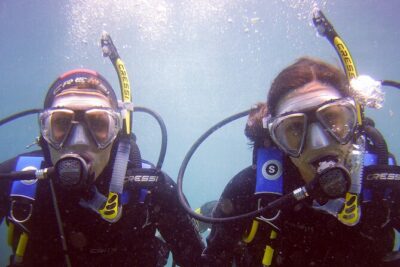 ★ 5.0Scuba Diving Experience for Beginners in Gran CanariaFrom $107561 reviews
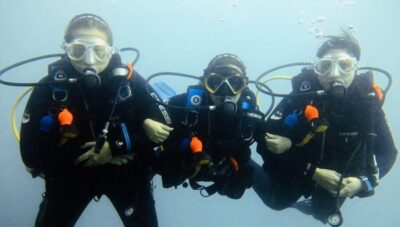 ★ 4.9Try Scuba Diving for BeginnersFrom $94403 reviews
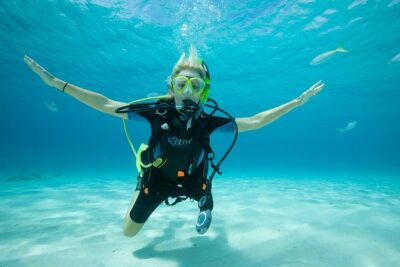 ★ 5.0Beginners Scuba Diving Experience in Gran CanariaFrom $108254 reviews
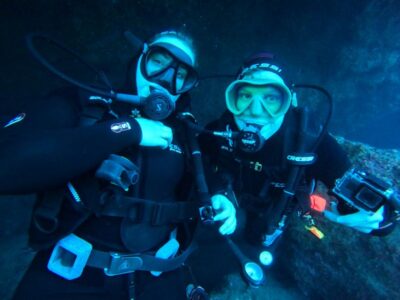 ★ 4.9Discover Scuba Diving – Free TransfersFrom $105115 reviews
 ★ 4.7Live an Adventure and Learn to Dive with ExpertFrom $100109 reviews
 ★ 4.4Discover Scuba Diving Beginner ProgramFrom $117103 reviews
 ★ 4.5Discover Scuba Diving in Puerto de MoganFrom $10387 reviews
 ★ 4.8Las Canteras Scuba DivingFrom $11884 reviews
Browse the lists this tour appears in