
Reviewed · SCUBA DIVING COURSES & DIVES
Open Water Diver Scuba Diving Course in Puerto de Mogan
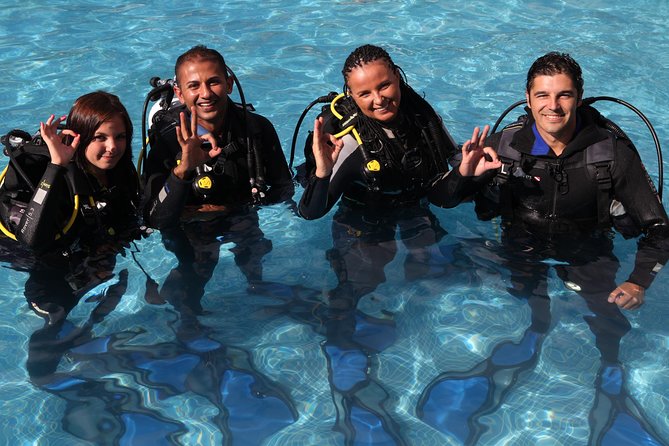
Puerto de Mogan is a great place to learn. This 3-day PADI Open Water Diver course pairs classroom-style theory sessions with hands-on water practice, then finishes with four open-water sessions in the Atlantic. I like that it’s built for real beginners, yet still keeps a safety-first pace with professional, PADI-certified instruction.
Two things I really appreciate: the hotel pickup and drop-off (so you’re not juggling buses before your first session), and the fact you get all the required gear plus supervision throughout. The only real catch is budget awareness: the PADI open-water manual and certification fee are not included, and you’ll also want to plan for optional photos.
If you’re nervous about being new, that’s normal. With the right health check and a calm attitude, this course can be a solid, confidence-building start—especially if you’re the kind of person who likes clear explanations.
In This Review
- Key points before you go
- Price and logistics: what $542.15 covers in real terms
- Where you start in Puerto de Mogan: meeting point and pickup rhythm
- Your 3-day training path: theory, confined sessions, then ocean practice
- Four ocean sessions and the marine life payoff
- Instruction quality: PADI-certified support and a calm safety style
- Equipment, insurance, and the extras that cost more later
- What to bring, and the health/fitness reality check
- Who should book this course in Gran Canaria (and who might want a different plan)
- Delphinus School setup: what your day feels like
- Should you book this PADI Open Water Diver course here?
- FAQ
- What is the duration of the course?
- Where does the course take place?
- Is hotel pickup included?
- What language is the course offered in?
- Do I need previous scuba experience?
- How old do you have to be to enroll?
- What training does the course include?
- Are scuba equipment and insurance included?
- What extra fees should I expect?
- Is there free cancellation?
Key points before you go
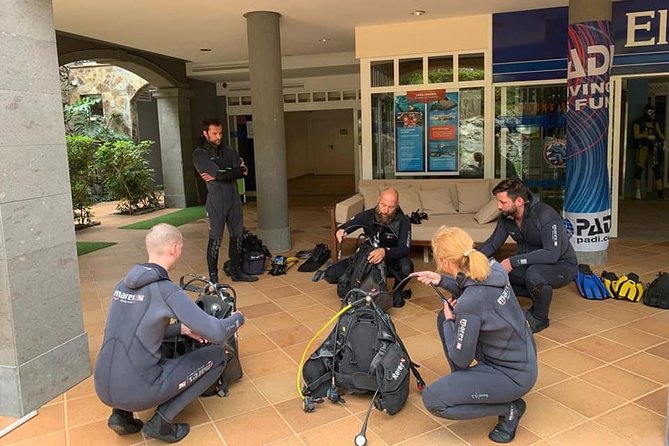
- Hotel pickup included, with a straightforward meeting spot near the Cordial Mogan Playa area
- Small group feel with a maximum of 20 participants
- Full training mix: 5 theory sessions, 5 confined-water sessions, and 4 open-water sessions
- Certified support you can trust, including an instructor named Peter in at least one praised experience
- Most essentials covered (equipment + scuba insurance), with only the manual/cert fee as the main add-on
Price and logistics: what $542.15 covers in real terms
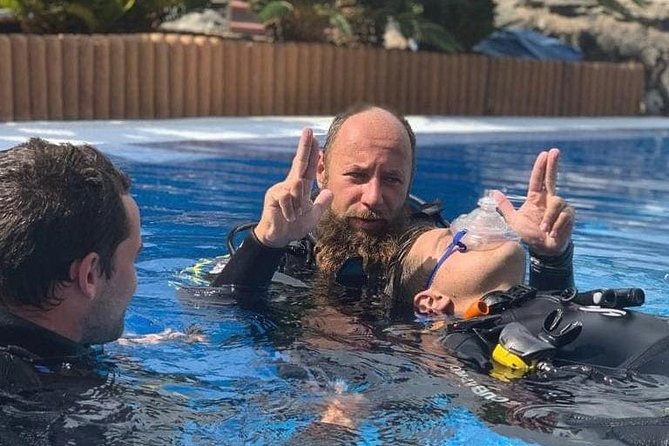
At $542.15 per person, this course is priced for you to show up and train, not chase loose ends. You’re paying for instructor-led supervision across the full learning track, plus the setup that makes training possible: required scuba equipment, scuba insurance, and the in-and-out transport from your hotel.
The best value move here is understanding what you still owe. The PADI open-water manual & certification fee are listed as separate, payable at the dive center (87€). Photos are also extra. So the true “all-in” cost is your course price plus that 87€ manual/cert fee, and anything you choose to buy later.
Is it expensive? Not if you factor in what’s included: gear, insurance, and multiple sessions over three days. It’s cheaper than the “pay for everything separately” approach—especially once you add in that you’re not doing local transportation logistics.
Down to the reef at El Cabron, more dives and courses
Where you start in Puerto de Mogan: meeting point and pickup rhythm
The day begins at 9:00 am. If you opted for pickup, the team will collect you from your Gran Canaria hotel and bring you back at the end of the experience, which is a big deal for a course that can run mentally and physically tiring.
If you’re heading there on your own, the meeting point is inside or near the Cordial Mogan Playa area, then you go toward the beach path and look for the Delphinus sign next to a door (ring the doorbell and they’ll open). That’s useful because you don’t need to interpret complicated directions—just find the sign and follow the entry instructions.
Timing tip: plan to arrive early enough to be settled before the first briefing. For first-time scuba students, being rushed at the start can turn nerves into avoidable stress.
Your 3-day training path: theory, confined sessions, then ocean practice
This PADI Open Water Diver course runs in three main phases, and the structure matters. You’re not asked to freestyle your way into the ocean. You build from the ground up:
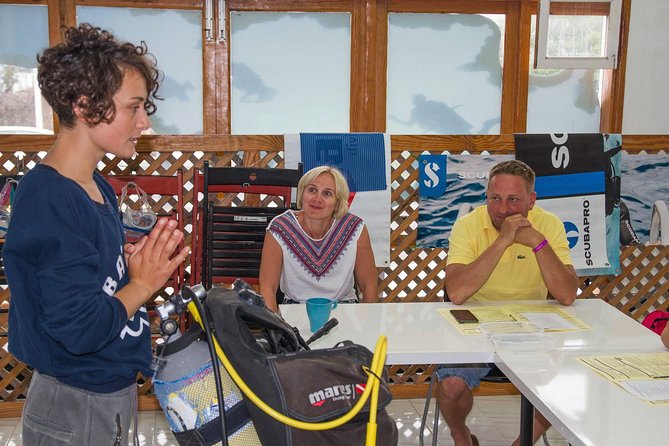
1) Knowledge Development (theory): You’ll cover the basics of scuba principles through online work or at the dive center (your course includes 5 theory sessions). This is where you learn the language—how systems work, what to watch for, and how to think underwater.
2) Confined Water Sessions: These are your skill-building block. You get 5 confined-water sessions, where you practice core techniques in a controlled environment. This is the part that often decides whether you feel calm later. If you take your time here, the open water feels much more manageable.
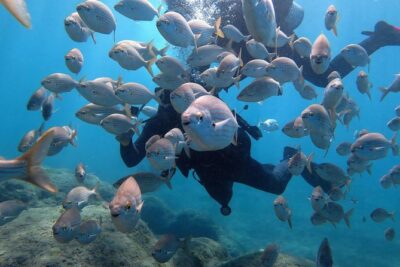
3) Open-Water Sessions: You’ll complete 4 open-water sessions in the ocean. This is where you use what you learned and see the marine life for which the Canary Islands are famous.
Across three days, that mix is what makes the program work for most beginners. The drawback is also predictable: it can be a lot to absorb back-to-back. If you’re easily overwhelmed by long days of learning and practice, ask yourself whether you’ll be able to rest between sessions and focus on what your instructor asks for.
Four ocean sessions and the marine life payoff
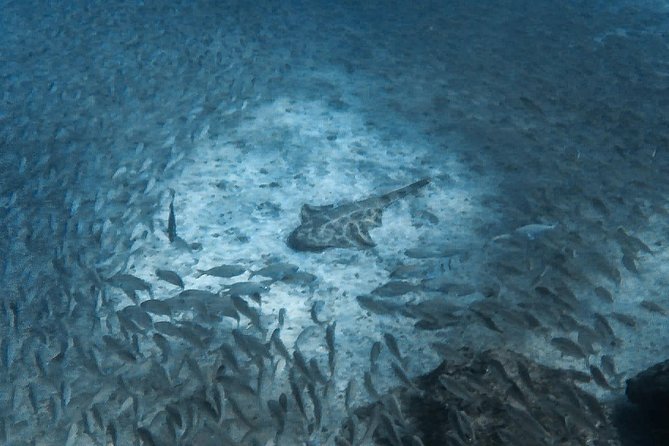
The highlight you’re really paying for is the transition from controlled practice to real water conditions. You’ll do four open-water sessions, and the course info notes fantastic marine life sightings.
What’s valuable here is how the training is designed to get you there safely. You’re not just going down to check a box. You’re applying the skills you learned in confined water—so you can pay attention to surroundings, buoyancy, and safe procedures, instead of constantly fighting your gear or your breathing.
A practical way to enjoy marine life more: during training, your instructor will likely guide your attention to safety and technique first. Once you feel steadier, you’ll notice how much easier it is to look around—rather than constantly scanning for the next cue. That’s the moment the ocean starts to feel like the ocean.
Instruction quality: PADI-certified support and a calm safety style
This course is led by PADI-certified instructors, and the review you provided puts extra emphasis on how much time the instructor took to explain things. One highlighted experience called out an instructor named Peter, praised for being patient, making students feel safe, and handling questions calmly.
That matters more than people expect. First-timers don’t just learn how to use equipment. You’re also learning how to interpret your own sensations underwater—pressure changes, breathing rhythm, and buoyancy feedback. If your instructor is clear and attentive, you spend your energy learning instead of worrying.
Group limit helps too. With a maximum of 20 participants, you’re less likely to feel lost in a crowd. Still, you should expect hands-on coaching to be focused. The course includes supervision throughout, so you’re not left on your own to figure it out.


Equipment, insurance, and the extras that cost more later
Included in the price:
- Required scuba equipment
- Scuba insurance
- Hotel pickup and drop-off
- Delphinus Club membership
- Instructor supervision
Not included:
- PADI open-water manual & certification fee (87€)
- Photos (optional purchase)
Here’s the practical way to think about the “extras.” Equipment included means you don’t need to rent gear separately, and insurance included reduces financial worry if something unexpected happens. The manual/cert fee is the biggest planned add-on, so budgeting for 87€ is smart.
Photos are the wild card. If you want underwater shots, go in knowing they’re sold separately. If you don’t care much about photos, you can focus fully on learning and skip that expense.
What to bring, and the health/fitness reality check
Bring a swimsuit and a towel. That part seems basic, but for many people it’s the difference between being ready and doing last-minute scrambling.
You’ll also need:
- Adequate swimming skills
- Good physical health
- A moderate physical fitness level
Before you start, you’ll complete a health questionnaire. Some conditions (like asthma or heart conditions) may prevent you from diving, and the course info advises you to consult your doctor if you have any concerns. This isn’t paperwork fluff—it’s how the course filters out risks.
One more logistics note that matters if you’re flying in or out: diving within 24 hours of flying is not recommended. If your trip involves multiple flights, plan your schedule so you have at least a day buffer whenever possible.
Who should book this course in Gran Canaria (and who might want a different plan)
This course is aimed at people who want a real scuba certification start. You don’t need prior experience. The minimum age is 10 years, and children must be accompanied by an adult.
It also fits well if:
- You want the globally recognized PADI Open Water Diver credential
- You prefer structured learning (theory → confined sessions → open water)
- You like the convenience of hotel pickup
- You’re comfortable learning in English (the course is offered in English)
Considerations if you’re not sure:
- If you’re feeling anxious about water safety or medical restrictions, plan time to go over the health questionnaire honestly.
- If you’re expecting a super relaxed holiday day with minimal structure, this is still a training course—there’s a lot to do across three days.
Delphinus School setup: what your day feels like
The course starts from a meeting setup connected to the Cordial Mogan Playa area, with clear directions for where to enter near the beach route. Practically, that means your first moment is likely a briefing, equipment setup, then movement into water-based training.
You can expect a consistent rhythm: explain, practice, repeat. The most praised parts of the experience you shared are tied to explanation and safety. That usually means you’ll spend time getting comfortable with technique and procedures before you’re asked to do more complex tasks.
Even if the ocean sessions are the main attraction, your real “win” is likely to come from the confined-water work. That’s where you build a skill foundation so the open sessions feel like progress instead of pressure.
Should you book this PADI Open Water Diver course here?
I’d book it if you want a straightforward path to certification in a place that’s easy to reach from your hotel. The value is strong because the essentials are covered: equipment, supervision, insurance, and transport. The training structure (theory + confined sessions + four open-water sessions) is exactly what you want when you’re building confidence from zero.
I wouldn’t book it if you’re hoping to keep the cost fully contained with no add-ons. Budget for the 87€ manual/cert fee, and decide early if you want photos. Also skip it if you already know you can’t meet the health requirements or you have medical questions you haven’t cleared with a doctor.
If you’re new to scuba training and want to feel safe while you learn, this Puerto de Mogan setup is a smart choice.
FAQ
What is the duration of the course?
The course runs for about 3 days.
Where does the course take place?
It takes place in Gran Canaria, Spain, with training based around the Puerto de Mogan area.
Is hotel pickup included?
Yes, hotel pickup and drop-off are included.
What language is the course offered in?
The course is offered in English.
Do I need previous scuba experience?
No prior experience is required.
How old do you have to be to enroll?
The minimum age is 10 years. Children must be accompanied by an adult.
What training does the course include?
It includes 5 theory sessions, 5 confined water sessions, and 4 open-water sessions.
Are scuba equipment and insurance included?
Yes. All required scuba equipment and diving insurance are included.
What extra fees should I expect?
You’ll pay for the PADI open water manual and certification fee at the dive center (87€). Photos are also available for purchase.
Is there free cancellation?
Yes, you can cancel for a full refund up to 24 hours in advance.
More of the Gran Canaria Ledger
- Gran Canaria: Catamaran Dolphin Watch Cruise with Snorkeling★ 4.4 · 4,761 reviews
- Maspalomas: Guided Camel Ride in the Maspalomas Sand Dunes★ 4.4 · 4,526 reviews
- Poema del Mar Skip-the-Line Ticket★ 4.8 · 3,856 reviews
- Puerto de Mogán: Submarine Tour★ 4.4 · 3,792 reviews
Down to the El Cabron Reef
- Scuba Diving Experience for Beginners in Gran Canaria★ 5.0 · 561 reviews
- Gran Canaria: Try Scuba Diving for Beginners★ 4.9 · 403 reviews
- Beginners Scuba Diving Experience in Gran Canaria★ 5.0 · 254 reviews
- Gran Canaria: Discover Scuba Diving – Free Transfers★ 4.9 · 115 reviews
Fresh on the Gran Canaria List
- Gran Canaria: Highlights & hidden gems with Sky Rebels
★ 5.0 · 3 reviews - Escape room “The gratest show on earth” at Holidayworld
★ 3.9 · 3 reviews - Wanderungen im grünen Gran Canaria
★ 5.0 · 3 reviews - 2 hours Double Pass Spa Circuit in Hotel Don Gregory
★ 3.5 · 3 reviews - Las Palmas Maspalomas Gran Canaria Salsa Lovers Dance Experience
★ 5.0 · 3 reviews - Traditional Market Day and San Mateo & Teror
★ 3.5 · 3 reviews
Scuba Diving Courses & Dives, compared.
 ★ 5.0Scuba Diving Experience for Beginners in Gran CanariaFrom $107561 reviews
 ★ 4.9Try Scuba Diving for BeginnersFrom $94403 reviews
 ★ 5.0Beginners Scuba Diving Experience in Gran CanariaFrom $108254 reviews
 ★ 4.9Discover Scuba Diving – Free TransfersFrom $105115 reviews
 ★ 4.7Live an Adventure and Learn to Dive with ExpertFrom $100109 reviews
 ★ 4.4Discover Scuba Diving Beginner ProgramFrom $117103 reviews
 ★ 4.5Discover Scuba Diving in Puerto de MoganFrom $10387 reviews
 ★ 4.8Las Canteras Scuba DivingFrom $11884 reviews
Browse the lists this tour appears in