
Reviewed · SURF & KITESURF LESSONS
Gran Canaria Surf Lessons: Playa del Inglés & Maspalomas
Surfing in Gran Canaria is easier than you think. This one-day lesson in Playa del Inglés & Maspalomas is built around certified instruction, hotel pickup (from the south area), and small groups that keep you moving. I like that you get a clear safety plan plus hands-on coaching from Spanish Surf Federation–certified instructors, and I also like that the day’s location is chosen based on tides and wind for safer, better surf. The main thing to consider is that waves are not always on the same beach, so you might travel between spots during the activity.
You’ll start with a warm welcome at the surf base, then do a short theory and safety briefing before your main practice time. The total experience runs about 4–5 hours, but the time in the water is about 2 hours, so it’s focused without dragging. Expect a fun, low-stress rhythm aimed at getting you riding your first wave (or cleaning up your technique if you’re already surfing).
If you’re in town and want a surf day that feels organized from start to finish, this is a solid option—especially if you like the idea of small groups and equipment provided. Just note it’s not suitable for pregnancy or people with back problems, and pickup is only from the south area between 8:00 and 8:30 AM.
In This Review
- Key Things to Know Before You Go
- From Playa del Inglés to Your First Wave: How This Lesson Is Set Up
- Price and What $62 Really Buys You in Gran Canaria
- Pickup Window, Total Time, and the Real Rhythm of the Day
- Equipment, Wetsuits, and What to Expect When They Hand You Gear
- Theory on the Beach: Safety That Helps You Learn Faster
- Two Hours in the Water: Small Groups and Coaching in Real Time
- Choosing the Best Beach: Why You Might Go Somewhere New
- Who This Works For (and Who Should Skip It)
- What to Pack: The Stuff That Keeps Your Day Comfortable
- Language and Coaching Style: English, Spanish, and Patient Instruction
- Is This the Right Surf Lesson for Your Gran Canaria Trip?
- Should You Book This Surf Lesson in Playa del Inglés & Maspalomas?
- FAQ
- What’s included in the surf lesson?
- Where do pickup and drop-off happen?
- What time is pickup?
- How long is the whole activity?
- How long do I practice in the water?
- Are waves always at one beach?
- What should I bring?
- Who is this lesson not suitable for?
Key Things to Know Before You Go
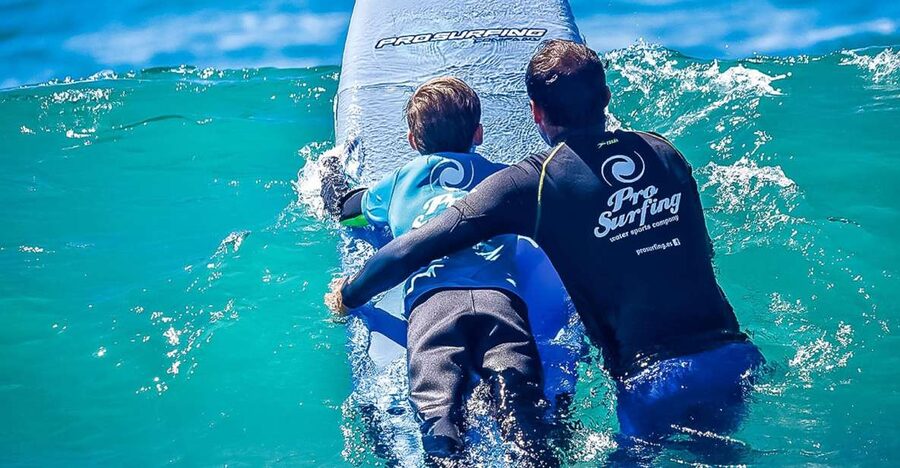
- Certified Spanish Surf Federation instructors guide you step by step for beginners through advanced surfers
- Small groups help you get faster, more personal feedback in the water
- Equipment is included: surfboard, wetsuit, and insurance (so you don’t scramble for gear)
- Best-beach planning: the team chooses spots daily based on swell, tide, and wind
- About 2 hours in the water inside a longer 4–5 hour day with breaks and coaching
- Pickup from the south area only, with a set pickup window of 8:00–8:30 AM
From Playa del Inglés to Your First Wave: How This Lesson Is Set Up
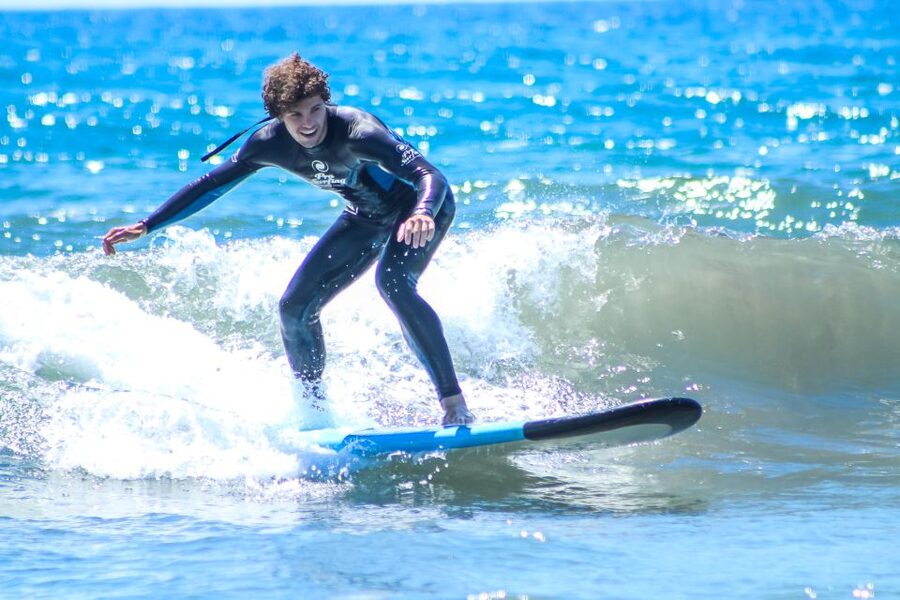
Gran Canaria’s south coast is one of the easiest places in Spain to try surfing without turning the day into a logistics project. This surf lesson is designed for that reality: you meet the team at the surf base in Playa del Inglés / Maspalomas, then get a full day flow that mixes land basics with real ocean time.
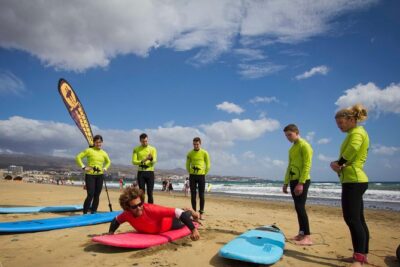
What matters most for most first-timers is not the hype. It’s structure. Here, you get a warm welcome, a theory and safety briefing, then guided practice with an instructor. The goal is simple: you learn what you need to stay safe, and you spend enough time in the water to feel progress—without the long gaps that can make surf lessons feel random.
The other smart part is that the school picks the day’s best conditions. Waves are never guaranteed on one exact beach every day, so the team may move to different spots depending on tides, wind, and swell. That choice is practical: you don’t want the ocean to decide your learning pace for you.
More lessons on the Playa del Ingles and Las Canteras breaks
Price and What $62 Really Buys You in Gran Canaria
$62 per person is the kind of price that can either be a steal or a trap—depending on what’s actually included. In this case, it’s easier to judge because the package covers the essentials.
You get:
- Hotel pickup and drop-off (south area only)
- Surfboard and wetsuit
- Introduction safety plus a theory lesson on the beach
- A lesson with a qualified instructor
- Qualified instructor assistance
- Insurance (explicitly included)
For your money, the value comes from avoiding the two big costs that often surprise people: gear and risk coverage. You’re not trying to source a wetsuit or pay extra for board time on the spot. And because insurance is mentioned as included, you can plan without adding another layer of uncertainty.
Also, the school has been operating since 2004 and is described as an official surf and kitesurf school. That doesn’t automatically make it good—but it does suggest experience with common beginner problems: nerves, paddling fatigue, and the moment when standing up finally clicks.
Pickup Window, Total Time, and the Real Rhythm of the Day
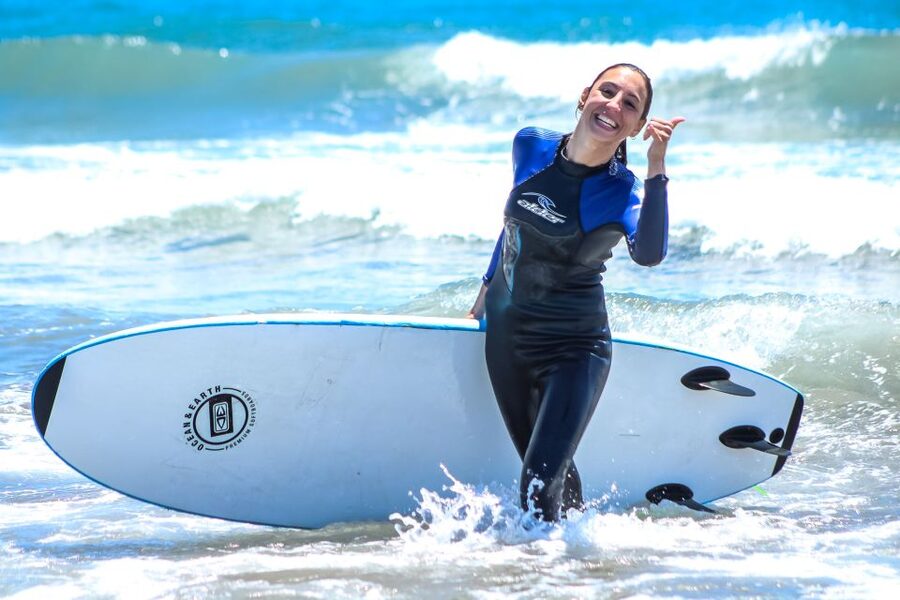
The day is not just a quick hour on the beach. You’re looking at about 4–5 hours total, and pickup is scheduled from 8:00 AM to 8:30 AM if you’re staying in the south area.
Here’s how that timing usually feels in practice:
- You’ll get picked up early, then arrive ready to change and get started.
- You do a short theory and safety component before water time.
- Then you get around 2 hours of practice in the water, including the practical coaching that follows the beach instruction.
- There are also breaks to relax and hydrate, which matters more than people think. Surfing burns energy fast, and an unplanned day can turn into a cranky mess.
One consideration: the exact surf spot can change based on the ocean. That means you should treat this as a surf session with a plan, not a guarantee of one exact beach for the whole day. If you’re the type who hates surprises, plan for that reality and keep your schedule flexible.
Equipment, Wetsuits, and What to Expect When They Hand You Gear
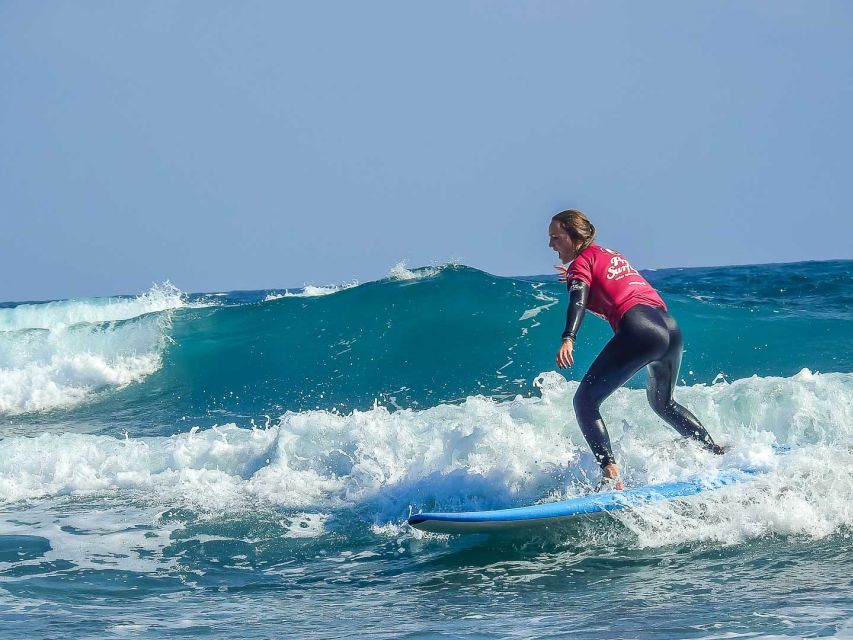
This lesson includes surfboard, wetsuit, and insurance, which is a practical win. Wetsuits can make or break your comfort—too thin and you get cold quickly, too thick and you feel restricted. Since the company provides one, you don’t have to guess what will work for Atlantic water temperatures.
You’ll also want to think ahead about how wetsuits affect your day:
- You’ll likely spend some time getting ready and moving on sand and boardwalks.
- Comfort shoes help, because you may need to walk on beach terrain before you’re in the water.
- A towel and a change of clothes are not optional. After two hours in the ocean, you’ll appreciate drying off and staying comfortable.
If you’re worried about fitting or feeling awkward in gear, focus on this: the instruction is step by step for all levels. That means your first day isn’t just about holding a board. It’s about learning a system.
Theory on the Beach: Safety That Helps You Learn Faster
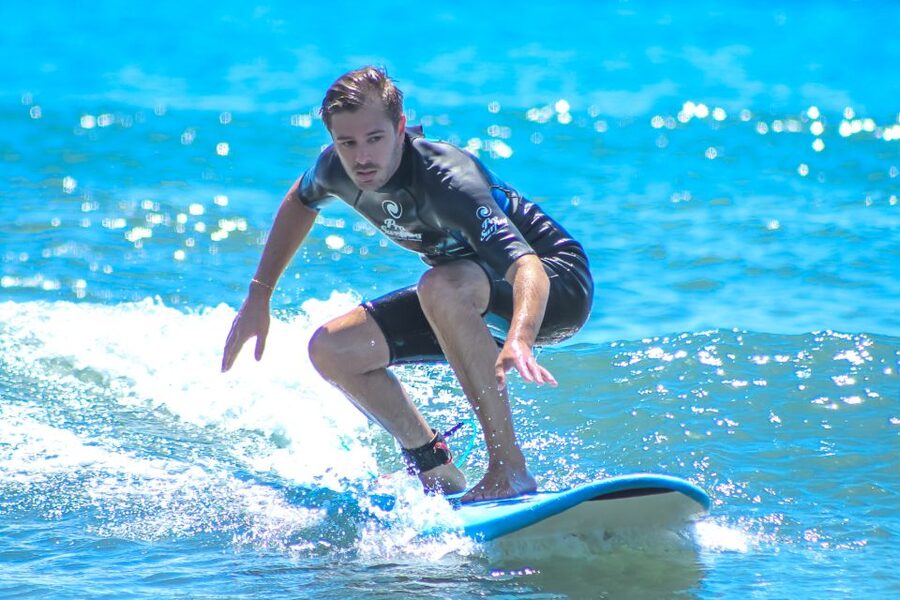
A lot of surf lessons fail the first-timer test because they either skip the basics or overload you with information. Here, the day starts with introduction safety and a theory lesson on the beach.
That beach component is valuable because it saves your energy in the water. If you understand:
- how to handle your board,
- what to do when waves are pushing you around,
- basic safety awareness,
then your time in the water becomes learning instead of simply surviving.
The timing also helps. Your water time is about 2 hours, and the theory is part of that total practice structure. You won’t sit for ages listening. You’ll get enough understanding to move confidently from standing attempts to real wave rides.
You should also expect a calm, friendly tone. The coaching style comes up in the feedback you’ll see: people consistently highlight good mood, clear explanations, and instructors who keep things fun.
Learn something with your hands here
Two Hours in the Water: Small Groups and Coaching in Real Time
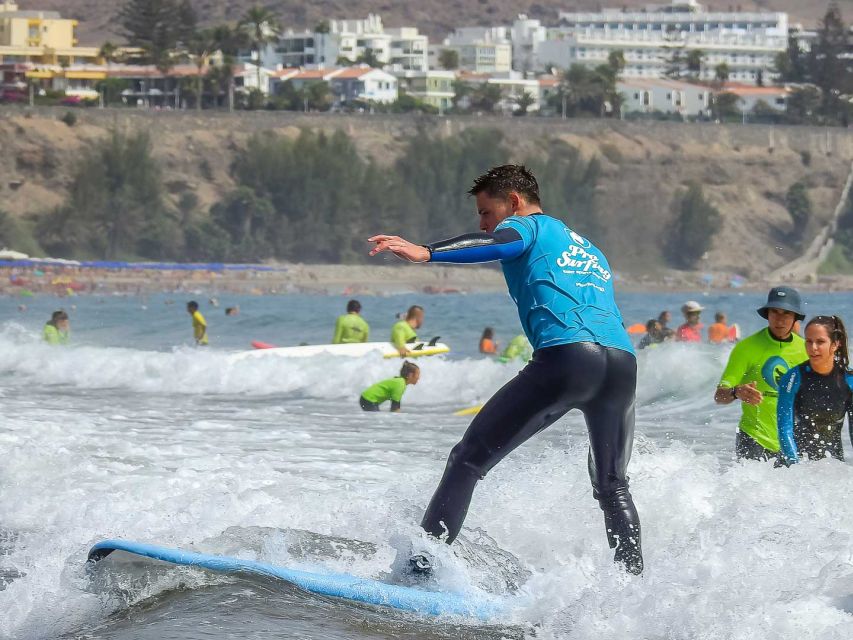
The main payoff of this surf lesson is the water time—about 2 hours. But what you should really care about is not only the number. It’s the coaching density.
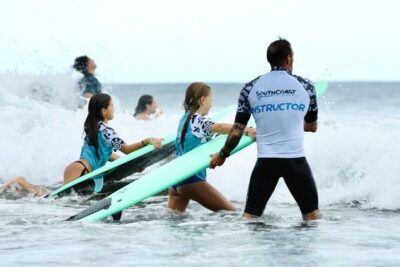
This school uses small groups, and that’s why you get faster progress. In a bigger group, instructors spend time repeating basics to people who aren’t ready. In a small group, they can watch you closely and correct the exact thing holding you back.
If you’re a beginner, the lesson is designed to help you get your balance and timing. If you’re intermediate or advanced, the structure is still built around personalized guidance, meaning the focus can shift to technique refinement rather than restarting from zero.
One name that stands out from the instructor feedback is Victor. If you end up with him, the pattern from the coaching notes is clear: professional, patient, and especially supportive for true beginners who need calm reassurance.
And yes, you’ll get breaks. Surfing demands attention and stamina. You don’t want to burn out right when you’re starting to find your rhythm.
Choosing the Best Beach: Why You Might Go Somewhere New
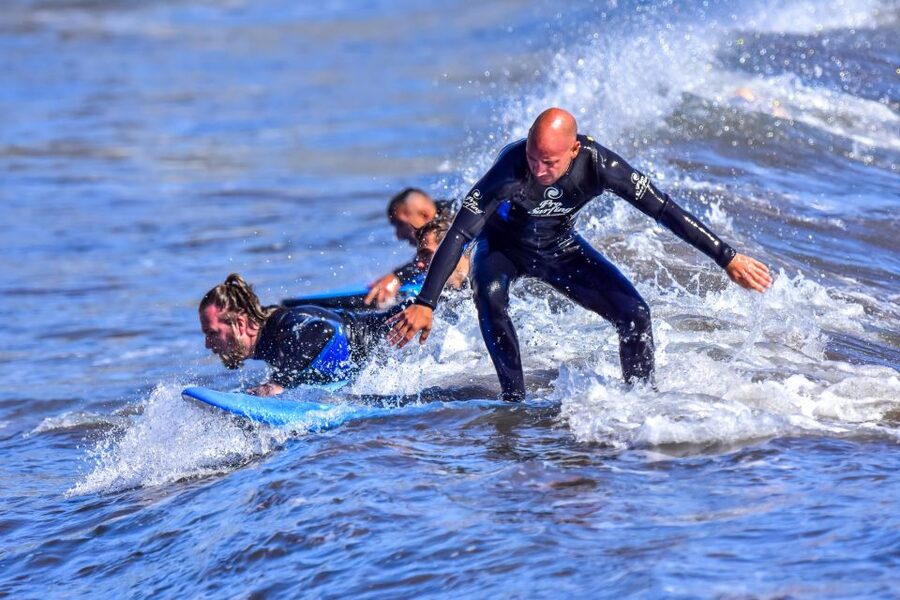
One of the most important practical details: waves are not always on the same beach. The team selects the best beach and conditions each day using swell, tide, and wind, and the lesson can move to different spots.
This can be a drawback if you hate the idea of relocating mid-activity. It can also be the reason your session feels better than you expected. The Atlantic can be moody. Choosing the best location for safer, more workable waves helps you learn without constant frustration.
So, if you’re planning other activities the same day, keep them flexible. Give the surf session a “take the lead” role for the morning and early afternoon, and don’t schedule something that depends on you being at one fixed beach all day.
Who This Works For (and Who Should Skip It)
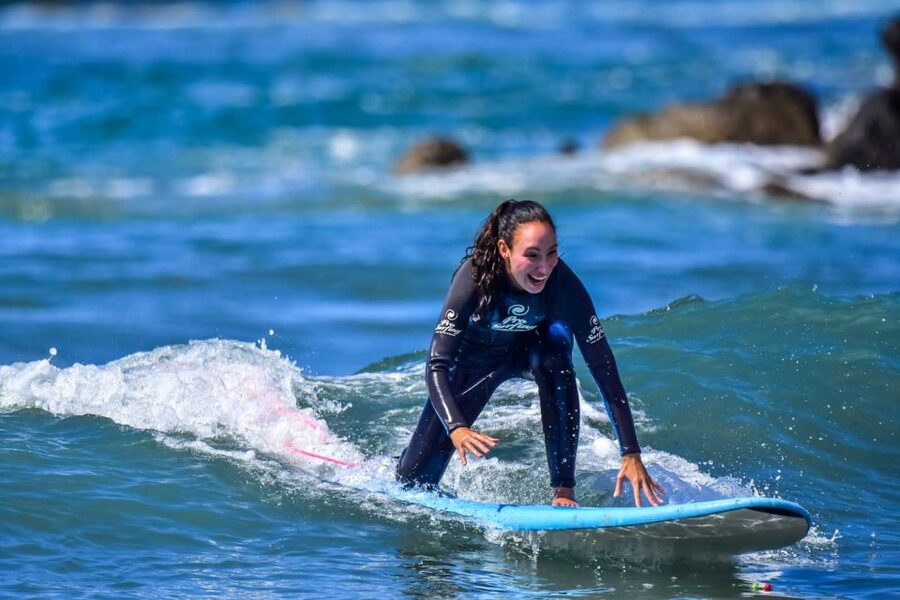
This lesson is designed for all levels:
- beginners taking their first steps on a board,
- intermediates working on consistency,
- advanced surfers refining technique.
It’s also described as a private group, which usually pairs well with small-group attention. If you want instruction without feeling lost in a crowd, this setup is a good match.
There are two clear “not suitable for” notes:
- pregnant women
- people with back problems
If either applies, it’s best to look for a different kind of activity or ask about suitability directly—because surf can involve awkward movement on sand and board handling that doesn’t mix well with certain physical limitations.
What to Pack: The Stuff That Keeps Your Day Comfortable
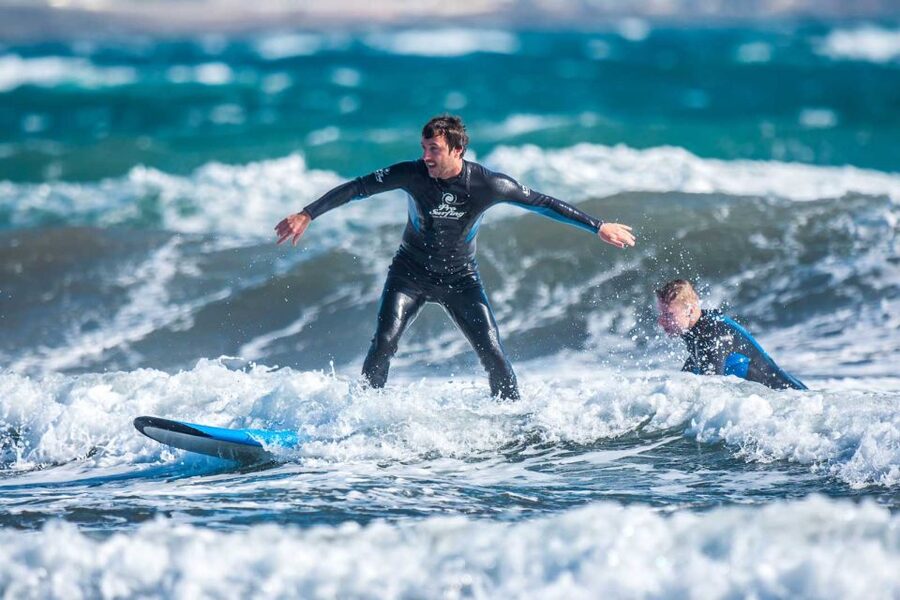
You’ll have a better experience if you show up ready for sand, sun, and post-water drying. The basic list is straightforward, but it’s worth taking seriously.
Bring:
- comfortable shoes
- sunglasses
- sun hat
- swimwear
- change of clothes
- towel
- camera
- comfortable clothes / beachwear
- passport or ID card (a copy is accepted)
Also, keep in mind what is not allowed:
- pets
- luggage or large bags
That’s practical. You don’t want to manage big bags while you’re changing and hauling gear near the water.
Language and Coaching Style: English, Spanish, and Patient Instruction
The lesson runs with instructors who speak English and Spanish. That’s helpful in Gran Canaria where you’ll often find mixed-language groups and instructors can switch smoothly.
From the feedback provided, the coaching tone matters: people liked the good mood, fun, and the way explanations are delivered. That makes a difference because surfing has a learning curve that can feel frustrating if you’re anxious or tired.
If you want a day where you’re not treated like you’re in the way, look for the small-group, step-by-step style. That’s what this plan is built around.
Is This the Right Surf Lesson for Your Gran Canaria Trip?
For a lot of people, this is the simplest way to fit surfing into a holiday in the south. You get a predictable morning pickup window, equipment included, and a focused session where you’re in the water enough to actually learn.
Choose this surf lesson if:
- you want official, certified instruction rather than guesswork,
- you like small groups and direct feedback,
- you value equipment + insurance included,
- you’re happy with the idea that the surf spot may change depending on conditions.
Skip it (or rethink it) if:
- you’re not comfortable with morning pickup from the south area only,
- you have back issues or you’re pregnant,
- you need a fixed location for the entire session.
Should You Book This Surf Lesson in Playa del Inglés & Maspalomas?
Yes—if you want a surf day that feels organized, beginner-friendly, and realistically paced. The price feels fair for what’s included: pickup, board and wetsuit, beach theory and safety, and qualified instructors with insurance.
The biggest “make-or-break” factor is fit: you’re either okay with a plan that adapts to tides, wind, and swell, or you’re not. If you’re flexible, you’ll likely enjoy the fast feedback loop and the chance to ride your first wave (or improve on what you already do).
FAQ
What’s included in the surf lesson?
The package includes hotel pickup and drop-off (south area only), a surfboard, a wetsuit, introduction safety, a theory lesson on the beach, and assistance from qualified instructors. Insurance is also included.
Where do pickup and drop-off happen?
Pickup and drop-off are included only for hotels in the south area.
What time is pickup?
Pickup is scheduled between 8:00 AM and 8:30 AM.
How long is the whole activity?
The total duration is approximately 4–5 hours, depending on where the ideal surf spot is that day.
How long do I practice in the water?
The time in the water is about 2 hours, including the theory and practical beach class as part of the overall session.
Are waves always at one beach?
No. The waves are never on the same beach, and you may have to go to different beaches depending on conditions.
What should I bring?
Bring comfortable shoes, sunglasses, a sun hat, swimwear, a change of clothes, a towel, and comfortable clothes for the beach. You should also bring a passport or ID card (a copy is accepted).
Who is this lesson not suitable for?
It’s not suitable for pregnant women and people with back problems.
Made by Hand on the Island
- Playa del Inglés Maspalomas: High Quality Surf Classes★ 4.9 · 363 reviews
- Gran Canaria Maspalomas: Surf lessons all levels★ 5.0 · 197 reviews
- Small-Group Surf Lessons in Gran Canaria★ 5.0 · 138 reviews
- Playa del Inglés surf lessons★ 4.8 · 121 reviews
More of the Gran Canaria Ledger
- Gran Canaria: Catamaran Dolphin Watch Cruise with Snorkeling★ 4.4 · 4,761 reviews
- Maspalomas: Guided Camel Ride in the Maspalomas Sand Dunes★ 4.4 · 4,526 reviews
- Poema del Mar Skip-the-Line Ticket★ 4.8 · 3,856 reviews
- Puerto de Mogán: Submarine Tour★ 4.4 · 3,792 reviews
Out on the Playa del Ingles Break
- Playa del Inglés Maspalomas: High Quality Surf Classes★ 4.9 · 363 reviews
- Puerto Rico, Gran Canaria: boat trip, drinks, food, paddle surfing, snorkeling★ 4.6 · 310 reviews
- Gran Canaria Maspalomas: Surf lessons all levels★ 5.0 · 197 reviews
- Small-Group Surf Lessons in Gran Canaria★ 5.0 · 138 reviews
Fresh on the Gran Canaria List
- Gran Canaria: Highlights & hidden gems with Sky Rebels
★ 5.0 · 3 reviews - Escape room “The gratest show on earth” at Holidayworld
★ 3.9 · 3 reviews - Wanderungen im grünen Gran Canaria
★ 5.0 · 3 reviews - 2 hours Double Pass Spa Circuit in Hotel Don Gregory
★ 3.5 · 3 reviews - Las Palmas Maspalomas Gran Canaria Salsa Lovers Dance Experience
★ 5.0 · 3 reviews - Traditional Market Day and San Mateo & Teror
★ 3.5 · 3 reviews
Surf & Kitesurf Lessons, compared.
 ★ 4.9Playa del Inglés Maspalomas: High Quality Surf ClassesFrom $63363 reviews
 ★ 4.6Puerto Rico, Gran Canaria: boat trip, drinks, food, paddle surfing, snorkelingFrom $56310 reviews
 ★ 5.0Gran Canaria Maspalomas: Surf lessons all levelsFrom $59197 reviews
 ★ 5.0Small-Group Surf Lessons in Gran CanariaFrom $72138 reviews
 ★ 4.8Playa del Inglés surf lessonsFrom $58121 reviews
 ★ 4.6Maspalomas Surf LessonsFrom $58113 reviews
 ★ 5.0Premium Surf Course in Gran CanariaFrom $7789 reviews
 ★ 4.8Las Palmas: Learn to Surf with a Special Price for Two GroupFrom $11730 reviews
Browse the lists this tour appears in