
Reviewed · SURF & KITESURF LESSONS
San Agustín Surf lessons
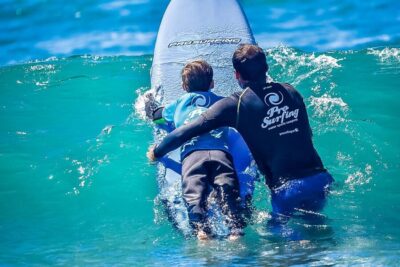
Learning to surf feels fast here, even if it’s your first day. You get a full 3-hour course at some of the best beaches in Gran Canaria’s south, taught by a professional instructor who focuses on technique and fun. I like that the instruction is built for different skill levels, and that the groups are small enough for real feedback.
Two things I’d highlight right away: the small-group setup (so you’re not stuck watching for long) and the way the school adjusts when conditions aren’t ideal. One consideration: pickup isn’t for everyone. The included hotel transfer is only for people staying in the south of the island, and the exact beach can shift depending on the sea.
In This Review
- Key points before you go
- Three Hours of Surf School on Gran Canaria’s South Coast
- Where You Meet: Faro Maspalomas and the Likely Beaches
- Small Groups That Actually Keep You Moving
- What You Learn: Board Control, Technique, and Real Confidence
- How the Session Flows From Meeting Point to Time in the Water
- Equipment, Instructor Help, and Insurance (The Stuff That Saves Your Trip)
- Price and Value: Why About $58 for 3 Hours Adds Up
- Transfer From South Hotels: Helpful If You’re in the Right Area
- Who This Surf Course Suits Best
- Should You Book San Agustín Surf Lessons? My Take
- FAQ
- How long is the San Agustín surf lesson?
- Where do I meet for the surf lesson?
- What beach will the lesson take place on?
- Are hotel transfers included?
- How big are the groups?
- What languages do the instructors speak?
- Is surf equipment provided?
- Is there insurance, and what is the cancellation policy?
Key points before you go
- Meet at Faro Maspalomas: that’s where you’ll connect with the surf school team and get your board.
- Beach location can change: lessons usually run at Playa del Inglés or Maspalomas next to the lighthouse, depending on weather.
- Small groups mean coaching: lessons are in groups up to 8, with a maximum cap around 10.
- You’re not left to figure it out: an instructor helps you throughout, with hands-on guidance.
- Conditions can be managed: if waves are too small, the instructor may move you to a better spot.
- Value package for $58: equipment, instructor, and insurance are included, and transfers can be added for south-stay hotels.
Three Hours of Surf School on Gran Canaria’s South Coast
A 3-hour surf lesson is a sweet spot. Too short, and you spend the time just getting your bearings. Too long, and you burn out before you get the technique to stick. Here, the timing is built for momentum: you start with basic handling, then you spend more time actually trying the moves.
You’re also in a great part of the island for this kind of beginner-to-intermediate fun. The lesson is designed around beaches in the south—near Playa del Inglés and Maspalomas—and those areas generally make it easier to stage a smooth lesson compared with more complicated coastlines.
The style is practical: you’re learning to handle the board, but you’re also being taught how to shift your body so the wave doesn’t throw you off instantly. The course description sums it up as moving like a fish, and the structure supports that mindset.
More lessons on the Playa del Ingles and Las Canteras breaks
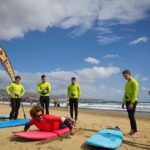
Where You Meet: Faro Maspalomas and the Likely Beaches
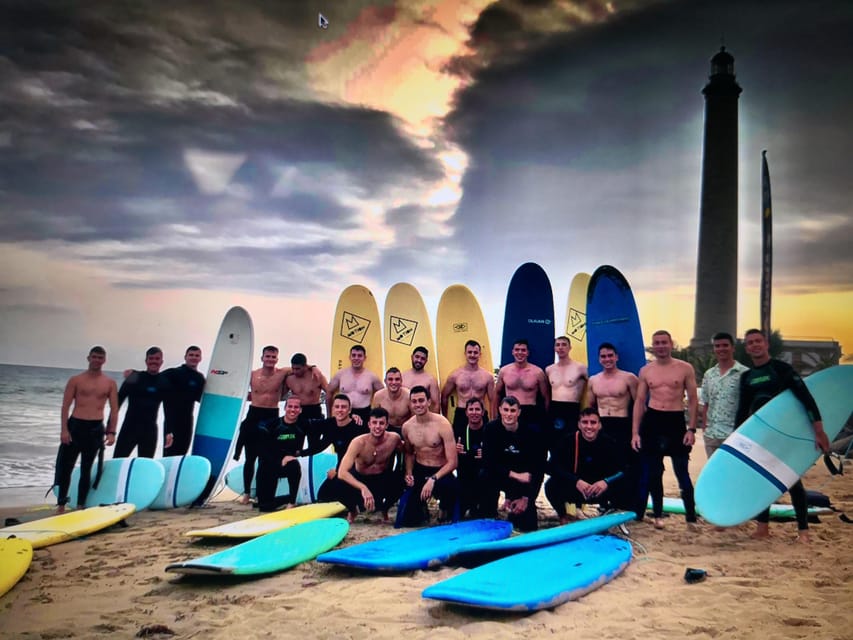
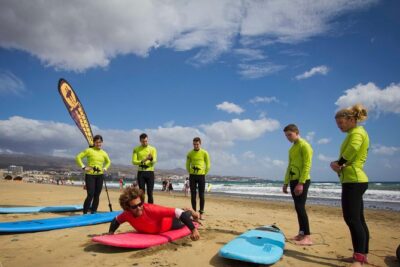
Most of the time, you’ll gather at the Faro Maspalomas meeting point, which is where the surf school is located. From there, you get your high-quality board and then head out to the beach where the session will run.
Your exact beach depends on sea conditions. The plan is usually Playa del Inglés or Maspalomas beach next to the Lighthouse, but the provider can change location based on what the ocean is doing that day. That flexibility matters more than it sounds. Surf is weather-driven, and a lesson works best when the waves are the right size and shape for learning.
Starting time is typically in the morning. The school will contact you to confirm the schedule based on real conditions in the water, not a fixed guess on paper. If you’re the type who loves tight itineraries, build in a little breathing room around that morning window.
Small Groups That Actually Keep You Moving
The coaching style here is tied to group size. Lessons are run in small groups—up to 8 people in the class format—and the overall limit is kept small (around 10 participants). That’s the difference between getting one quick pointer and getting repeated corrections while you’re still learning the basics.
When the group is small, instructors can watch what you do, not just what you meant to do. You’ll get help whenever you need it, which is huge during the part where most beginners struggle: paddling, timing your pop-up, and staying balanced when the board starts turning.
If you’ve done group activities before where you basically wait your turn, this will feel different. You’re there to surf for the full 3-hour block, not to rotate through a checklist.
What You Learn: Board Control, Technique, and Real Confidence
This course isn’t just about standing up once. It’s about getting the technique that helps you stand up more often—and then control what happens next.
You’ll work on core fundamentals like:
- How to handle the surfboard so it doesn’t feel like a random plank
- How to move your body for better balance while you catch a wave
- Technique cues that help you improve without getting overwhelmed
What I like is that the lesson is adapted for all levels. That means you’re not forced into a one-speed class. Beginners get guidance that matches where they are, while more confident surfers can still benefit from refining how they move and how they read the wave.
There’s also evidence the instructors pay attention to the actual wave set. One instructor mentioned in the reviews is Tony, and there’s a clear pattern: when waves are small, Tony may take the group to another beach with better conditions. That kind of adjustment is what keeps a 3-hour lesson fun instead of frustrating.
How the Session Flows From Meeting Point to Time in the Water
While the exact beach can shift, the rhythm stays similar.
First, you meet at Faro Maspalomas and get your surfboard. That early board handoff helps you get used to what you’re riding before you’re in the deeper end of the lesson. Then you head to the lesson beach for the main work.
Once you’re on the sand and in the water, the instructor runs the session as a guided progression. You practice the movements, get corrected, try again, and then build from there. With small groups, the instructor can keep your attempts aligned with what you just learned, instead of letting the gaps get too big.
You’ll also spend enough time in the water for this to feel like a real surfing experience, not a short intro. The course is 3 hours, so it’s long enough to go from nervous to active.
Learn something with your hands here
Equipment, Instructor Help, and Insurance (The Stuff That Saves Your Trip)
A surf lesson only feels worth it when you don’t waste time worrying about gear. Here, you get surf equipment included. That usually means you show up and focus on learning, not sourcing a board, leash, or the right basics.
You also get an instructor throughout the session. The course description calls out help whenever you need it, and the small group size supports that promise. This is where you’ll feel the difference most. When your timing is off, an instructor can fix it on the spot.
Insurance is included too. That’s a quiet benefit that matters for active days, especially when you’re new to the sport. You’re still doing something physical and ocean-based, but you’re doing it with the reassurance that coverage is part of the package.
If you’re considering doing surf on your own, this is the main advantage. You’re paying for coaching and risk management, not just a place to stand on a board.
Price and Value: Why About $58 for 3 Hours Adds Up
At around $58 per person for 3 hours, the price lands in the “worth it if you’ll use it” category. You’re not paying only for time in the ocean. You’re paying for instruction, equipment, and included insurance, plus sometimes a hotel transfer if you stay in the south.
Here’s how I judge value for lessons like this:
- Small group attention is expensive when you’re doing it the right way. If an instructor can correct you repeatedly, that’s real value.
- Equipment included saves you time and hassle.
- Insurance included reduces trip anxiety.
- Adjustment to conditions helps protect the quality of the experience. A lesson that switches beaches when waves are too small tends to stay enjoyable.
The only “value risk” is weather dependence. Since the lesson beach can change based on sea conditions, your day might feel slightly less predictable than a fixed attraction. Still, that’s also the reason the class can work instead of forcing you to struggle with the wrong waves.
Transfer From South Hotels: Helpful If You’re in the Right Area
The course can include transfer to/from your hotel, but only if you’re staying in the south of the island. That can take stress out of a morning plan, especially if you’re not already familiar with how to get around Gran Canaria’s southern towns.
One practical note from real feedback: some people found that pickup didn’t happen as expected even when it was listed in the booking. It’s a good reminder to double-check your confirmation details and timing so you don’t lose time waiting at the wrong spot.
If you’re not staying in the south, you should plan on getting yourself to the meeting point. Either way, you’ll still start at Faro Maspalomas and then move to the beach for the lesson.
Who This Surf Course Suits Best
This is a strong choice if you:
- Are a beginner and want structure, not random trial and error
- Want small-group coaching so you can get real feedback
- Are visiting the south of Gran Canaria and want a short, focused activity
- Learn best when you can correct technique quickly
It’s also a good fit if you’re intermediate and want refinement. Since the course is adapted for different levels, you’re not locked into a purely beginner-only pace.
If you’re extremely schedule-driven, keep in mind the timing can be influenced by sea conditions. The lesson often starts in the morning, but the exact time is confirmed by the provider, and the beach may shift too.
Should You Book San Agustín Surf Lessons? My Take
If you want a surfing experience that feels guided, this is an easy yes. You get 3 full hours, included equipment, and instructor help in a small group setting that keeps you active. The course also looks built to protect quality, with the option to adapt when waves aren’t ideal.
I’d skip it only if you’re counting on a very specific morning schedule with zero flexibility, or if you’re not staying in the south and don’t want to handle meeting-point logistics yourself. Otherwise, for around $58, it’s a solid way to get real surfing instruction in Gran Canaria’s south, without turning the day into a complicated project.
FAQ
How long is the San Agustín surf lesson?
The course lasts 3 hours.
Where do I meet for the surf lesson?
You’ll meet at the tour meeting point at Faro Maspalomas, where the surf school is located.
What beach will the lesson take place on?
It’s usually carried out on Playa del Inglés or Maspalomas beach next to the lighthouse, but the location can change depending on the weather conditions.
Are hotel transfers included?
Transfer to and from your hotel is included only for guests staying in the south of the island.
How big are the groups?
The lessons are done in small groups, up to 8 people, and the activity is limited to around 10 participants.
What languages do the instructors speak?
Instructors speak Spanish and English.
Is surf equipment provided?
Yes, surf equipment is included.
Is there insurance, and what is the cancellation policy?
Insurance is included, and you can cancel up to 24 hours in advance for a full refund.
If you tell me your travel dates and whether you’re staying in the south, I can help you figure out how to slot the morning session into your day.
Made by Hand on the Island
- Playa del Inglés Maspalomas: High Quality Surf Classes★ 4.9 · 363 reviews
- Gran Canaria Maspalomas: Surf lessons all levels★ 5.0 · 197 reviews
- Small-Group Surf Lessons in Gran Canaria★ 5.0 · 138 reviews
- Playa del Inglés surf lessons★ 4.8 · 121 reviews
More of the Gran Canaria Ledger
- Gran Canaria: Catamaran Dolphin Watch Cruise with Snorkeling★ 4.4 · 4,761 reviews
- Maspalomas: Guided Camel Ride in the Maspalomas Sand Dunes★ 4.4 · 4,526 reviews
- Poema del Mar Skip-the-Line Ticket★ 4.8 · 3,856 reviews
- Puerto de Mogán: Submarine Tour★ 4.4 · 3,792 reviews
Out on the Playa del Ingles Break
- Playa del Inglés Maspalomas: High Quality Surf Classes★ 4.9 · 363 reviews
- Puerto Rico, Gran Canaria: boat trip, drinks, food, paddle surfing, snorkeling★ 4.6 · 310 reviews
- Gran Canaria Maspalomas: Surf lessons all levels★ 5.0 · 197 reviews
- Small-Group Surf Lessons in Gran Canaria★ 5.0 · 138 reviews
Fresh on the Gran Canaria List
- Gran Canaria: Highlights & hidden gems with Sky Rebels
★ 5.0 · 3 reviews - Escape room “The gratest show on earth” at Holidayworld
★ 3.9 · 3 reviews - Wanderungen im grünen Gran Canaria
★ 5.0 · 3 reviews - 2 hours Double Pass Spa Circuit in Hotel Don Gregory
★ 3.5 · 3 reviews - Las Palmas Maspalomas Gran Canaria Salsa Lovers Dance Experience
★ 5.0 · 3 reviews - Traditional Market Day and San Mateo & Teror
★ 3.5 · 3 reviews
Surf & Kitesurf Lessons, compared.
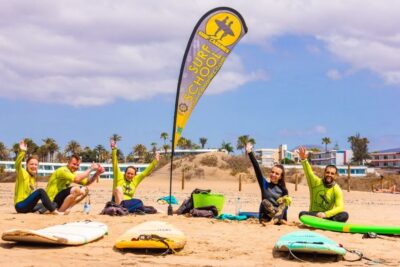 ★ 4.9Playa del Inglés Maspalomas: High Quality Surf ClassesFrom $63363 reviews
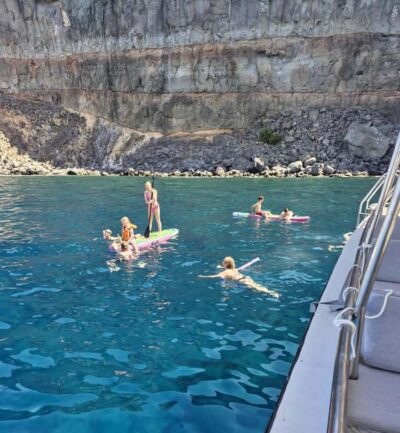 ★ 4.6Puerto Rico, Gran Canaria: boat trip, drinks, food, paddle surfing, snorkelingFrom $56310 reviews
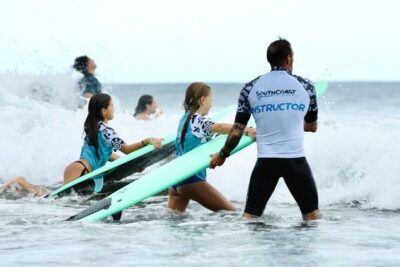 ★ 5.0Gran Canaria Maspalomas: Surf lessons all levelsFrom $59197 reviews
 ★ 5.0Small-Group Surf Lessons in Gran CanariaFrom $72138 reviews
 ★ 4.8Playa del Inglés surf lessonsFrom $58121 reviews
 ★ 4.6Maspalomas Surf LessonsFrom $58113 reviews
 ★ 5.0Premium Surf Course in Gran CanariaFrom $7789 reviews
 ★ 4.8Gran Canaria Surf Lessons: Playa del Inglés & MaspalomasFrom $6276 reviews
Browse the lists this tour appears in